11 March 2026
New tool developed to measure how invasive species reshape entire ecosystems
The framework expands the assessment of invasive species impacts beyond native population loss, incorporating how invasions alter ecosystem functioning.
The new model, developed with the participation of researchers from the Doñana Biological Station (EBD-CSIC), can classify up to 19 different types of impact linked to a specific invasion event.
The new model, developed with the participation of researchers from the Doñana Biological Station (EBD-CSIC), can classify up to 19 different types of impact linked to a specific invasion event.
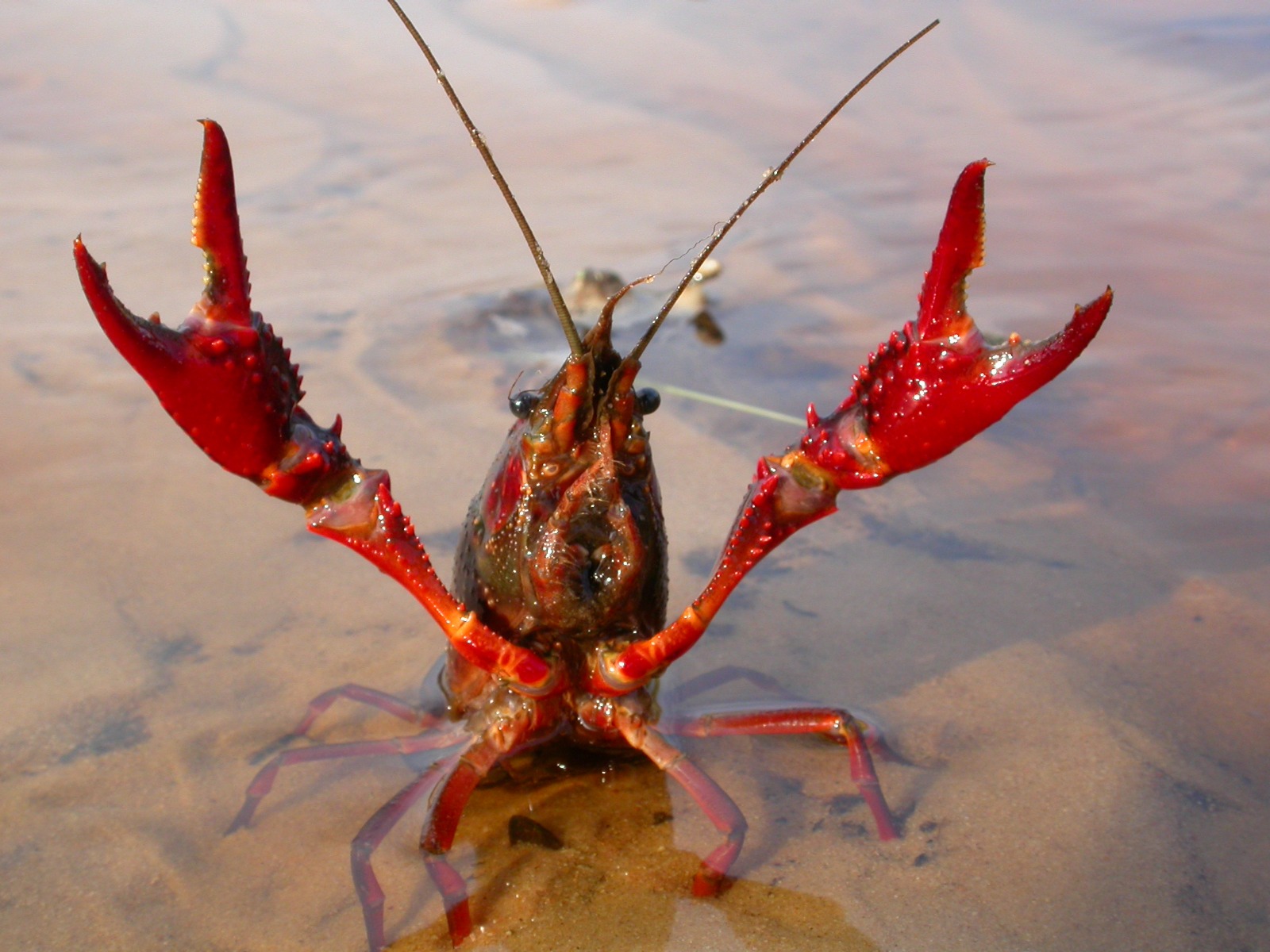
The red swamp crayfish (Procambarus clarkii), a widely distributed invasive species, feeds on native fauna as well as aquatic plants, reducing shelter for fish and affecting water quality. Credit: EBD-CSIC.
Invasive species not only harm native species; they can also completely transform the functioning of ecosystems. An international scientific team, including researchers from the Doñana Biological Station – CSIC, has created EEICAT (Extended Environmental Impact Classification for Alien Taxa), a new assessment framework that allows, for the first time, the measurement of these invisible and systemic impacts on ecosystems and improves decision-making for their management. The study has been published in PLOS Biology.
Until now, global assessment standards such as the current IUCN EICAT framework have mainly focused on the effects of biological invasions on native species, such as extinction or population decline. However, although this approach is important, it overlooks many other types of impacts that affect how ecosystems function. Some invasive species act as true “ecosystem engineers,” capable of radically transforming habitat conditions and ecological processes.
“If we take rabbits in Australia as an example, their voracity not only drives native plants to extinction, but their presence also triggers cascading effects in food webs and alters key ecosystem processes such as erosion or the capacity for natural reforestation,” explains Elena Angulo, researcher at the Doñana Biological Station and co-author of the study.
Impacts that go beyond native species
The new framework, which expands EICAT, aims to capture this complexity by mapping impacts at three levels. It begins at the level of individuals and populations, documenting changes in behaviour, health, or survival. It then broadens the focus to species and communities, where it tracks how diversity and the distribution of entire communities are reorganised. Finally, it reaches the ecosystem and abiotic level, accounting for impacts such as alterations in pollination, changes in water quality, or shifts in fire frequency. This approach makes the tool useful both for scientific research and for the management of invasive species.
“These impacts are numerous, can vary enormously between ecosystems, and are described with less consistency,” explains Laís Carneiro, lead author of the study and researcher at Université Paris-Saclay. “We need tools adapted to this complex ecological reality.”
The study presents several examples of these systemic changes that traditional assessments often overlook. One involves the red swamp crayfish (Procambarus clarkii), a widely distributed invasive species. In addition to feeding on native fauna, it also consumes aquatic plants, ultimately altering habitat structure. This leads to a loss of shelter for fish and other organisms, as well as fundamental changes in water quality.
Another case concerns rats living on islands. By preying on seabirds on land, invasive rats reduce the amount of nutrient-rich guano that these birds deposit on the soil. This disruption generates a cascade of effects that reaches the ocean, altering nutrient dynamics in adjacent coral reefs and affecting fish communities.
A change in how invasions are assessed
In addition to expanding the types of impacts analysed, EEICAT represents a shift in paradigm compared with its predecessor: it moves the assessment from general to case-specific. Unlike previous systems that assign a single “global score” to a species, EEICAT is based on the specific invasion event. This means that the same species may have different impact profiles depending on the ecosystem where it becomes established. In this way, impacts are evaluated case by case and according to ecological context, enabling more precise diagnoses.
EEICAT allows the classification of up to 19 different types of impact associated with a specific invasion event. For conservation managers, this tool provides a more comprehensive way of analysing the effects of invasive species. It not only identifies different types of impacts occurring in an invaded ecosystem, but also helps prioritise the management of species that may not cause immediate extinctions but are silently dismantling the ecosystem processes that sustain life.
The simplicity of EEICAT assessments offers policymakers and environmental managers a useful framework to help meet biodiversity targets such as those set out in the Kunming-Montreal Global Biodiversity Framework.
“Biological invasions are not simply about the loss of species; they are also about the silent rewriting of ecosystems,” says Franck Courchamp, lead author of the study and researcher at the CNRS at Université Paris-Saclay. “From soil chemistry to the rhythms of wildfires, their impacts resonate in the environment long after their arrival, and biodiversity managers now have a better tool to evaluate all these impacts.”