Seville’s city parks host up to 155 species of pollinators
The study, published in Insect Conservation and Diversity, was conducted by researchers from the Estación Biológica de Doñana (EBD-CSIC) and the Universidad de Sevilla.
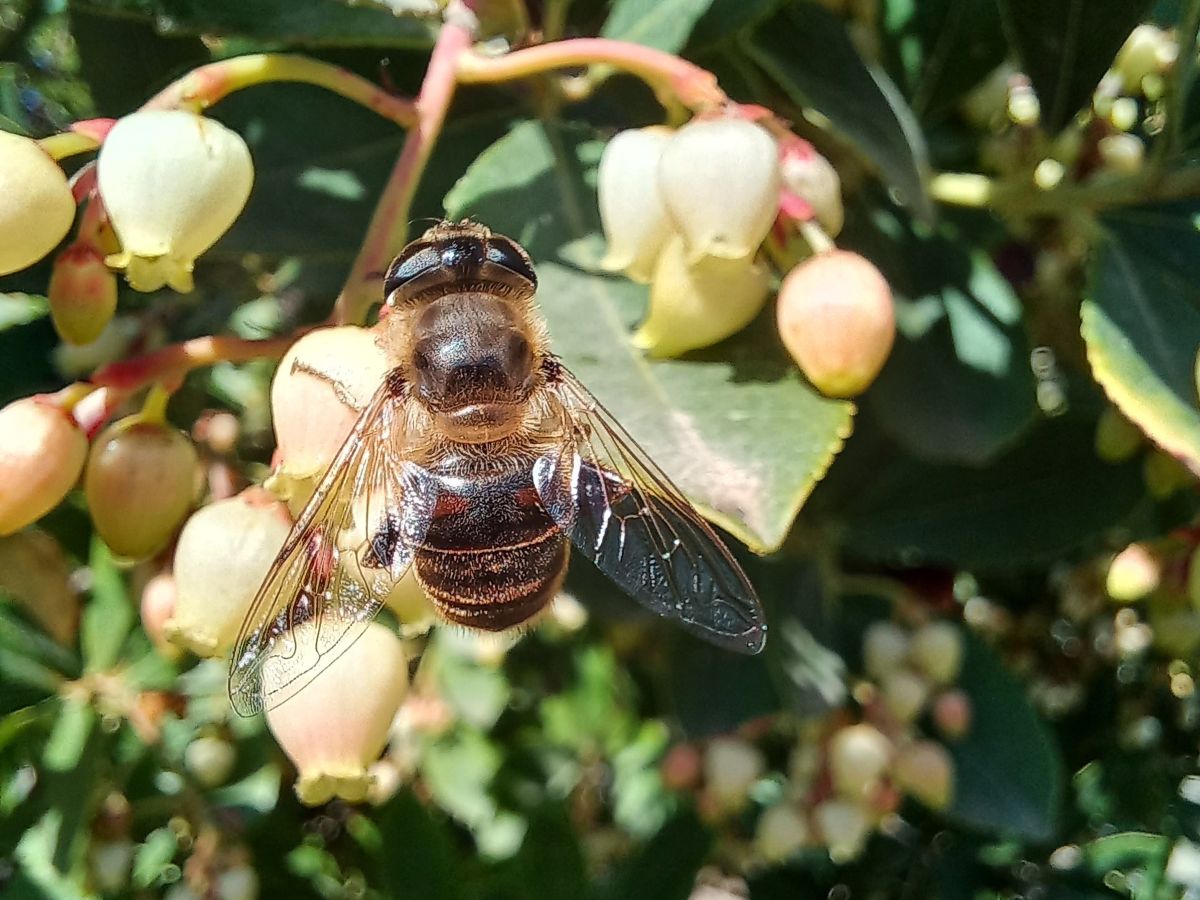
Female common drone fly (Eristalis tenax). Credit: Alejandro Trillo
Insects play a key role in pollinating flowers—both crops and wild plants—and in maintaining global biodiversity. Now, research led by the Estación Biológica de Doñana and the Universidad de Sevilla reveals that more than 150 different species of plant-pollinating insects inhabit Seville’s parks. The study, published in the journal Insect Conservation and Diversity, highlights the remarkable diversity of pollinating insects in urban green spaces.
Bees: The Leading Pollinators
Researchers recorded a total of 8,422 pollinator visits to 62 plant species. Of the 155 insect species observed visiting flowers across 15 parks during the 12-month study, most were bees—both wild species and the domesticated honey bee (Apis mellifera). Dipterans such as flies accounted for 14% of the records. Butterflies and beetles represented just 2% and 1% of the observed pollinators, respectively.
“Unlike the general public, who are typically only familiar with the honey bee, we detected a wide diversity of other bee species that do not form hives and live solitary lives. This diversity of solitary bees in urban parks reflects what is also observed in natural habitats,” explains researcher Montserrat Vilà of the Estación Biológica de Doñana.
Pollinators Present Year-Round
The study found that pollinators are active throughout the year. Peak activity occurs in early spring and late summer, although some solitary bees reach their highest abundance in summer.
The findings confirm that pollinator diversity remains high even during periods when resources are scarce in natural ecosystems. According to Vilà, parks may act as refuges thanks to Seville’s mild winter climate.
Although the mix of ornamental exotic plants in urban parks can help pollinators thrive year-round, the authors recommend avoiding the cultivation of invasive exotic species, as they may threaten biodiversity if they spread into surrounding natural areas..
Fermín Grodira / Contenido realizado dentro del Programa de Ayudas CSIC – Fundación BBVA de Comunicación Científica, Convocatoria 2024
Referencia
Alejandro Trillo, David Ragel-Celdrán, Francisco P. Molina & Montserrat Vilà (2026). Year-round pollinator visitation of ornamental plants in Mediterranean urban parks. Insect Conservation and Diversity https://doi.org/10.1111/icad.70057