The first socio-productive characterization of transhumance in Spain from an agroecological perspective identifies three types of transhumant systems and demonstrates their link to ecosystem sustainability
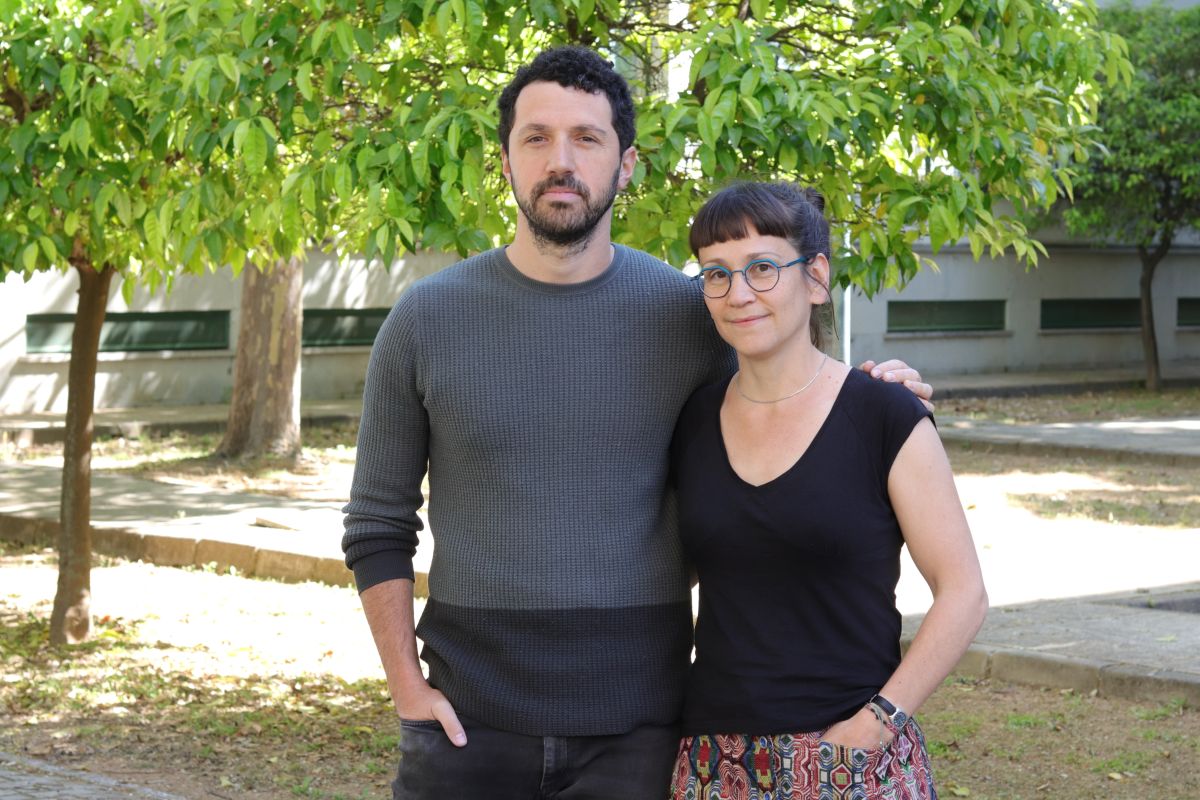
The researchers Francisco Lagos Susaeta from the University of Cordoba and Elisa Oteros Rozas from the Doñana Biological Station. Credit: University of Cordoba
The United Nations has declared 2026 the International Year of Rangelands and Pastoralists, highlighting an age-old activity practiced in more than a hundred countries and supporting between 200 million and 1 billion people. Beyond its economic value, pastoralism provides essential environmental, social and cultural contributions that are crucial for biodiversity conservation and climate change mitigation. Within pastoral systems, transhumance also plays a key role in socio-ecological sustainability and the vitality of rural areas. This millennia-old practice involves the seasonal movement of livestock, guided by herders to different latitudes in search of pasture and favorable climatic conditions.
In this context, a research team led by the University of Cordoba and the Doñana Biological Station (EBD-CSIC) presents the first socio-productive characterization of transhumant systems in Spain from an agroecology perspective, covering economic, productive, socio-cultural, political and governance aspects.
“Transhumance is an ancient practice, widespread across the globe and still very much alive in Spain. It enables the production of high-quality food by adapting to the availability of resources in each place and at each moment”, explains Dr. Elisa Oteros Rozas, researcher at the Doñana Biological Station. “In addition, this extensive livestock practice provides other ecosystem services, such as the conservation of ecological corridors and habitats, seed dispersal and local knowledge that has historically allow to adapt to all kinds of disturbances”.
The findings of this snapshot of transhumance in Spain provide key insights into its current viability and relevance. The data reveal a high diversity among Spanish transhumant herders, yet they share a common cultural and practical foundations shaped by political, economic and ecological pressures.
“With this work, we aimed to provide data, evidence and testimonies on transhumant livestock farming as a living heritage of immense cultural, social and ecological value, offering keys to truly sustainable interaction with out ecosystems and food production”, explains the study’s lead author, Francisco Lagos Susaeta, of the University of Cordoba.
"Con este trabajo queríamos aportar información, evidencia y testimonios de la ganadería trashumante, como patrimonio vivo de inmenso valor cultural, social y ecológico, que entrega claves para una interacción realmente sostenible con nuestros ecosistemas y en la producción de nuestros alimentos", explica el autor principal del trabajo, Francisco Lagos Susaeta de la Universidad de Córdoba.
The research, based on 84 interviews with transhumant herders from eight regions in Spain, used a mixed-methods approach. Qualitative content analysis identified the most frequent perspectives among interviewees on ecological, productive, economic, political and social issues. Quantitative methods, based on descriptive statistics and multivariate analysis, made it possible to identify distinct groups of transhumant herders.
“Our work provides cross-cutting and up-to-date information on a system that, although widely valued in discourse, lacks detailed current data. We assessed how transhumant practices align with the agroecological principles defined by the UN High Level Panel of Experts on Food Security, showing a high degree of consistency—particularly in ecosystem-related principles such as nutrient recycling, reduced inputs, soil health and biodiversity promotion. At the same time, these systems demonstrate strong resilience to external pressures such as agricultural intensification policies, market volatility and climate change,” Lagos adds.
Three groups of transhumant herders in Spain
The three groups of transhumant herders identified are mainly linked to traditional livestock routes and the territories where they operate: one associated with the Cañada Real Conquense, another with the Cañada Real Segoviana, and a third based in Santiago-Pontones (Jaén).
The first group (average age 55) undertakes longer migrations, with larger and mixed-species herds. The second group is younger (average age 47), focuses on cattle—particularly the Avileña-Negra Ibérica breed—and carries out shorter movements, with more diverse and direct marketing channels. The third group moves mainly between the Sierra de Segura and Sierra Morena, with predominantly sheep herds that are smaller than those of the other groups and with greater involvement in sector associations.
The findings of this study, published in Sustainability: Science, Practice and Policy, show that although transhumance is a highly resilient system—essential for ecosystem conservation and functionality, and capable of producing food of outstanding nutritional and cultural value—there is an urgent need for stronger policy support and a regulatory framework that protects it, adapts to its specificities, improves working and living conditions for transhumant herders, and ensures generational renewal.
“It is essential to differentiate in the market products from extensive and, in particular, transhumant livestock systems in order to improve their economic viability. To achieve this, urgent measures are needed, such as reopening public slaughterhouses and cutting facilities, adapting regulations to the realities of transhumance, and conserving and restoring livestock routes for pastoral use,” concludes Oteros Rozas.
Referencia Lagos-Susaeta, F., Rivera-Ferre, M. G., Gallar, D., Morales-Reyes, Z., Pérez-Ibarra, I., Durá-Alemañ, C. J., Oteros-Rozas, E. (2026). Socio-productive characterization and agroecological analysis of Spanish transhumance. Sustainability: Science, Practice and Policy, 22(1). https://doi.org/10.1080/15487733.2026.2627081