Researchers discover changes in the microbiota of common mosquito linked to avian malaria
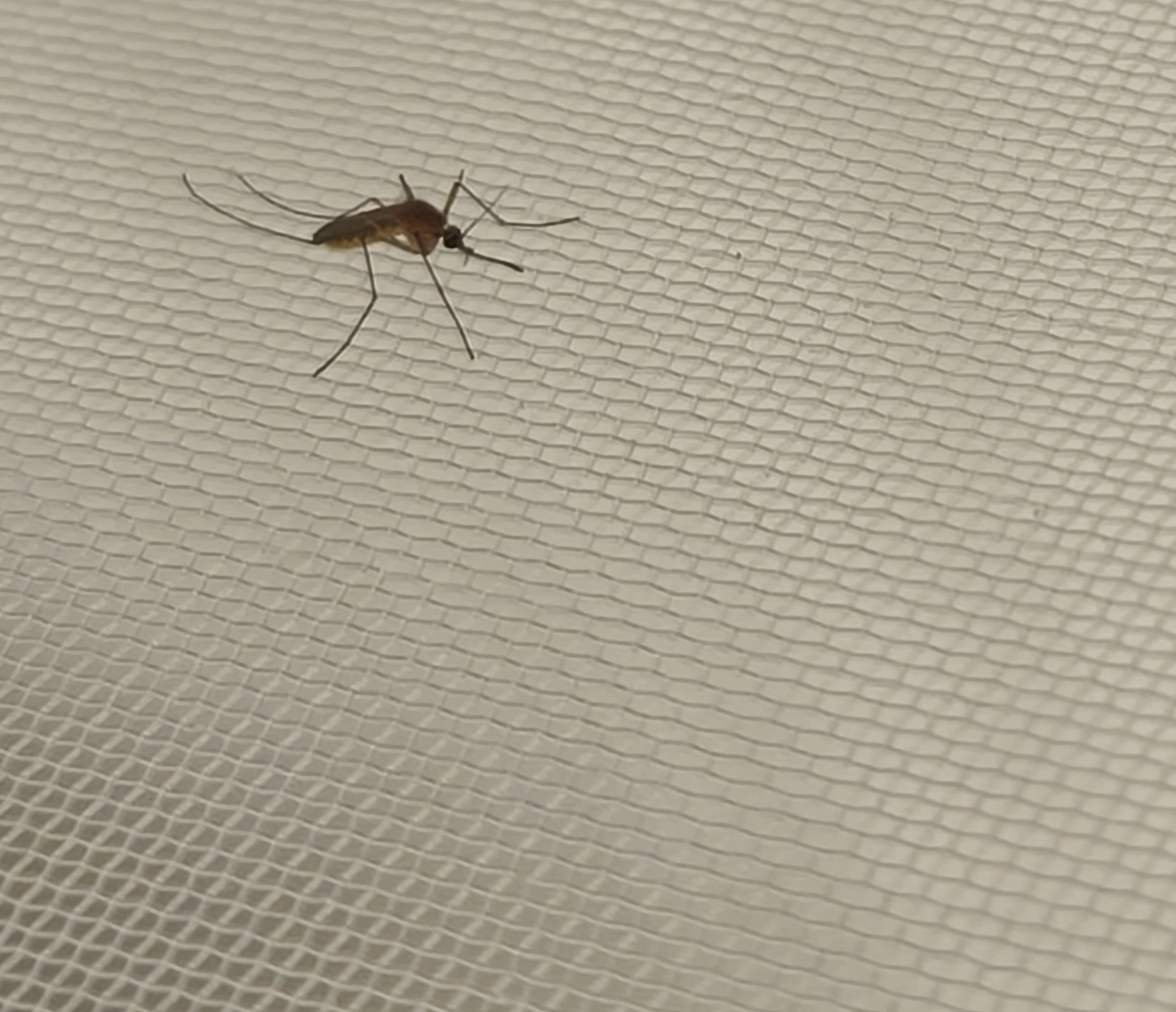
Common mosquito (Culex pipiens). Credit: Rafael Gutiérrez
An international research team led by the Doñana Biological Station (EBD-CSIC) has discovered that the mosquito Culex pipiens —a widespread species in Spain and the main vector of avian malaria— undergoes changes in the bacterial communities inside its body, known as the microbiota, when it comes into contact with the parasites that cause this disease. These changes could influence its ability to transmit avian malaria, a chronic infection that affects birds by reducing their reproductive success and their survival rate.
Avian malaria parasites are transmitted between birds through mosquitoes through a cycle similar to that of human malaria, but they pose no risk to human health. As such, they provide an excellent model for studying how mosquito-borne diseases spread. Besides, understanding these transmission mechanisms is crucial not only for advancing our knowledge of mosquito-borne infections but also for protecting the health and conservation of wild bird populations.
The study, published in the journal Scientific Reports involved researchers from Uppsala University (Sweden) and the Biomedical Research Institue of Malaga (IBIMA), and other institutions, as part of the Wildlife Malaria Network – WIMANET within the framework of COST Action.
How mosquito's microbiota changes
To investigate these changes, the team examined what happens to the microbiota of mosquitoes after they feed on birds infected with Plasmodium relictum, the most common parasite responsible for avian malaria. Using a genetic technique called metabarcoding, which allows scientists to identify the different bacteria present in mosquitoes, the researchers compared the microbiota of insects that had bitten infected birds with those that had fed on healthy ones.
The results revealed a detailed picture of the bacterial community living inside the insects. Specifically, they found that the microbiota of Culex pipiens is dominated by bacteria of the genus Wolbachia, followed by Stenotrophomonas and Faecalibacterium. While the overall number of bacterial species did not differ greatly between the two groups, mosquitoes that fed on infected birds showed higher levels of bacteria from the families Bacteroidaceae and Rikenellaceae.
According to Marta Garrigós, first author of the study and a PhD researcher at the Doñana Biological Station, these changes could have implications for mosquito biology: “The microbiota of mosquitoes that fed on infected birds appears to have a more active metabolism for certain nutrients, which could influence the mosquito’s physiology,” she explains.
Building on these findings, the team highlights the need for further research into the relationship between mosquito bacteria and the parasites they transmit. As Josué Martínez de la Puente, also a researcher at the Doñana Biological Station, notes: “It is essential to understand how the bacteria living in mosquitoes can influence the transmission of parasites such as those causing avian malaria, and therefore their role in the spread of diseases in nature.”
Beyond its scientific relevance, this work also has ecological implications: avian malaria parasites have harmful effects on many bird species, so understanding how they spread is important not only for human health research but also for the conservation of wildlife. Más allá de su interés científico, este trabajo también es importante desde un punto de vista ecológico ya que los parásitos de la malaria aviar tienen efectos negativos en muchas especies de aves, por lo que entender cómo se transmiten tienen implicaciones relevantes, no solo en el contexto de la salud humana, sino también en la conservación de la fauna silvestre.
Reference
Marta Garrigós, Olaya García-Ruiz, Charlotte R. Enkvist, María José García-López, Isabel Moreno-Indias, María José Ruiz-López, Jesús Veiga, Jordi Figuerola, Elin Videvall, Josué Martínez de la Puente. Effects of avian Plasmodium exposure on the microbiota of Culex pipiens. Scientific Reports https://www.nature.com/articles/s41598-025-22774-w