Scientists warn in Science about the use of science as a legal pretext to trap songbirds in Spain
The strategy recalls Malta’s attempt — which led to infringement proceedings by the European Commission for invoking science to legitimize bird hunting — or the attempts by Japan and other nations to continue authorizing whale hunting under a scientific banner.
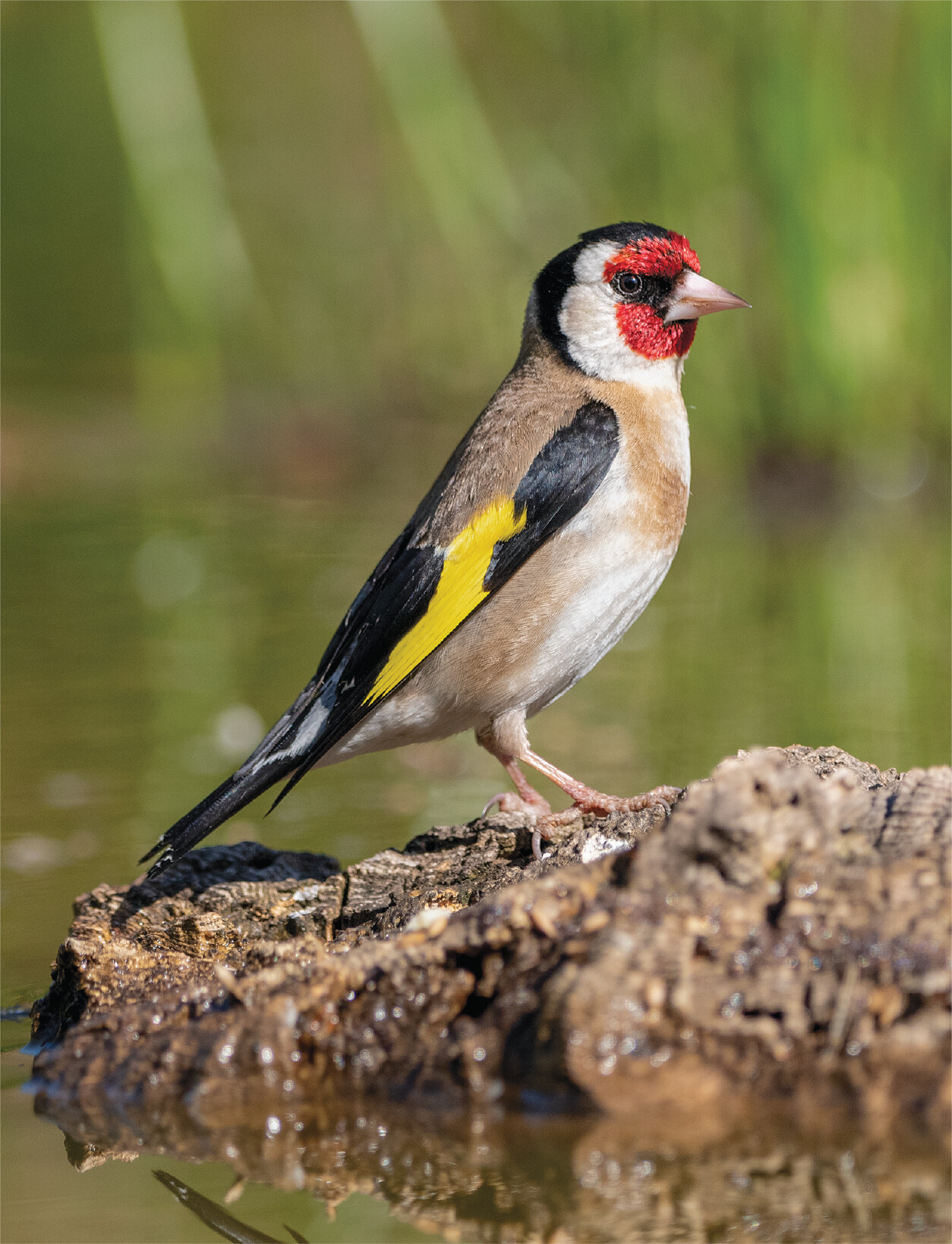
The capture and keeping of songbirds are strictly prohibited under the European Union Birds Directive of 2009, except for very specific scientific uses. In a letter published in the journal Science, researchers from several Spanish research centres and universities warn of the fraudulent use of scientific permits to conceal the capture of passerine birds in Spain.
The issue goes back a long way. Despite the existence of the European regulation, around 1.7 million birds were captured between 2013 and 2018 under hunting permits issued by regional governments in contravention of EU law. After years of controversy, Spain’s regional authorities finally suspended these authorizations in 2018.
However, following the ban on hunting use, the regional governments of Madrid and Andalusia — since 2018 and 2024 respectively — have granted hundreds of “scientific” bird-ringing permits to capture birds in the wild, even within protected areas. This strategy mirrors what previously occurred in Malta, which faced infringement proceedings by the European Commission for using science as a legal pretext to legitimize the captures. It also recalls Japan’s and other nations’ efforts to continue authorizing whale hunting under a scientific banner.
In Spain, these authorizations allow the use of methods prohibited under EU legislation — such as live decoys kept in cages and clap traps — and are framed as alleged “scientific projects” aimed at assessing whether wild bird populations could sustain future “sustainable” hunting exploitation. However, the authors of the letter warn of the absence of independent controls, standardized protocols, and transparency in the data — all of which reveal a conflict of interest incompatible with legitimate scientific practice and conservation goals.
“These actions lack methodological transparency, independent oversight, and open data publication reporting, all core requirements for reproducible and trustworthy science,” the authors argue. The instrumentalization of scientific language to justify recreational bird trapping not only puts birds at risk; it also erodes public trust in science and challenges compliance with European law.
The authors urge national and regional authorities to ensure that any trapping for research purposes meets criteria of transparency, methodological rigor, ethical supervision, and is carried out only by qualified personnel and authorized ringers. “Spain must safeguard the integrity of both scientific research and conservation policy,” the authors conclude.
The letter is signed by scientists from the Doñana Biological Station (EBD-CSIC), Pyrenean Institute of Ecology (IPE-CSIC), Institute for Game and Wildlife Resources Research (IREC-CSIC), the Experimental Station of Arid Zones (EEZA-CSIC), the National Museum of Natural Sciences (MNCN-CSIC), as well as from the University of Seville, the University of Huelva, Barcelona’s Museum of Natural Sciences, and SEO/BirdLife.
Reference:
Juan José Negro, Antoni Margalida, Carlos Camacho, Beatriz Arroyo, François Mougeot, José Luis Tella, David Serrano, Francisco Valera, Juan Arizaga, Jordi Figuerola, Eloy Revilla, Ismael Galván, Irene Mendoza, José Prenda, Airam Rodríguez, Josabel Belliure, Rafael Arenas, Juan Carlos Atienza, Tomás Redondo, Joan Carles Senar. Misusing research to trap songbirds in Spain. Science. https://doi.org/10.1126/science.aee3825