A study by the Doñana Biological Station warns of the expansion of invasive wasp species in Andalusia
Furthermore, the southernmost European records of the Asian hornet have been detected, revealing the species' ongoing southward expansion
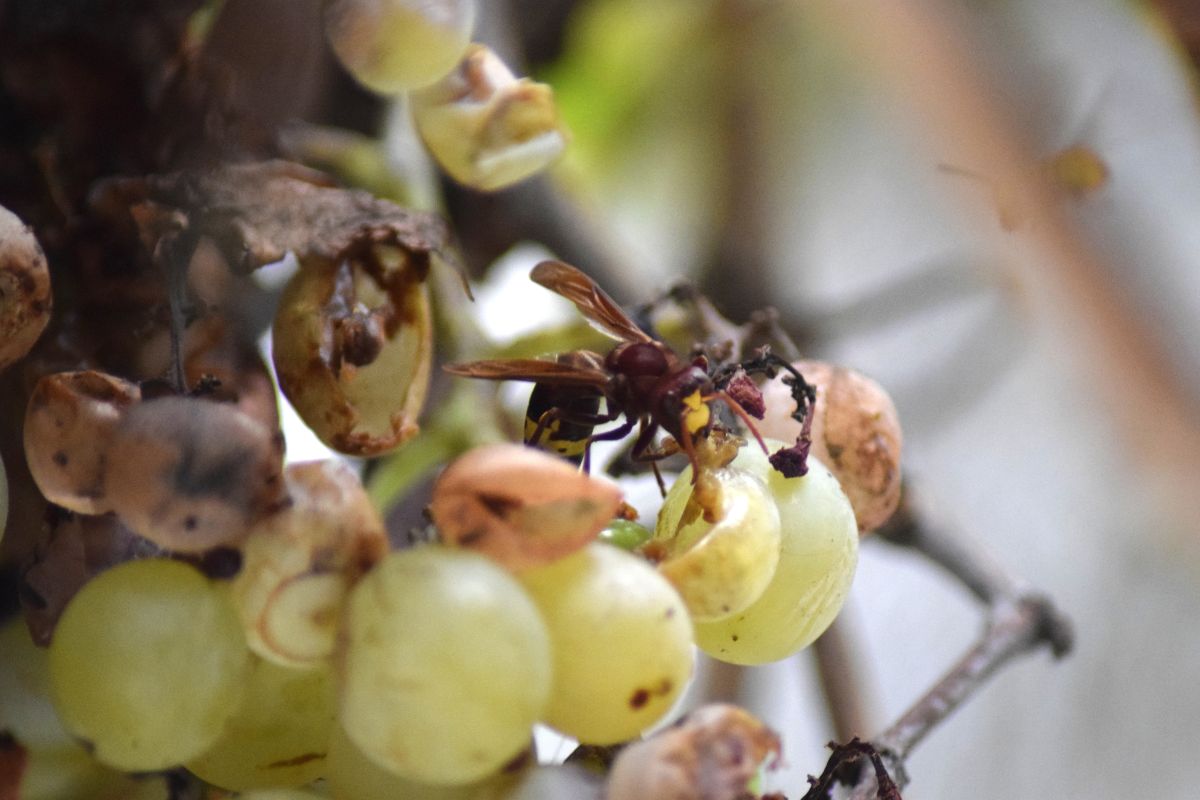
Oriental hornet located in a grape vineyard in Lora del Río (Seville). Credit: Laura Soler
A recent study by the Doñana Biological Station - CSIC reveals a significant expansion of several non-native species of the genus Vespa across the southern Iberian Peninsula. Most species within this genus, originating from Asia and Oceania, are known for forming large colonies and, in certain cases, for their potential impact on biodiversity, the economy, and public health. The findings have been published in the scientific journal Biological Invasions.
Four non-native wasp species recorded in Spain
The Iberian Peninsula has now recorded the presence of four non-native wasp species of the genus Vespa, according to the latest available data. The most widespread is the Asian hornet (Vespa velutina), native to Southeast Asia and first detected in France in 2005. From there, it expanded into Spain by crossing the Pyrenees, where it has successfully established itself and continues its forward progression.
The catalog of non-native wasp species in Spain has expanded to include the oriental hornet (Vespa orientalis) —first identified in Valencia in 2013 and subsequently across various locations in Andalusia— and the bicolor hornet (Vespa bicolor), first recorded that same year in Málaga. Additionally, Vespa soror has been located in Asturias, marking its first record in Europe; however, there is currently no evidence that the species has successfully established a permanent population.
The success of these species lies in their remarkable ability to adapt to new ecosystems,” explains Jairo Robla, a researcher at the Doñana Biological Station (EBD-CSIC). “They are resilient and highly competitive species, capable of contending with a wide range of conditions.”
Oriental and bicolor hornets extend their distribution
The new study focuses on the spatio-temporal evolution of the two most recently recorded species, Vespa orientalis and Vespa bicolor, with the objective of assessing their territorial expansion. Furthermore, the research incorporates new detection points for the Asian hornet, allowing for an updated occupancy map of this invasive species within the Iberian territory.
To map the expansion of these species since their initial records on the Iberian Peninsula, the scientific team utilized data from citizen science platforms, academic literature, and direct field observations.
The results demonstrate that the oriental and bicolor hornets are concentrated in coastal urban and peri-urban environments. Their arrival is likely attributed to anthropogenic pathways, including the movement of vehicles, people, and goods via both maritime and terrestrial routes. According to the study, these species appear to be successfully adapting to these novel environments, where they exhibit scavenging behavior, insect predation, and floral visitation. Furthermore, individuals have been identified within several natural parks, which could pose a significant new threat to local indigenous fauna.
In the case of the oriental hornet, the new data confirms its expansion toward the south and the interior of Andalusia. In previously invaded provinces —particularly Cádiz and Málaga— observations have surged in recent years, with new records detected in the provinces of Almería, Córdoba, Granada, Huelva, and Seville, alongside an isolated sighting in Toledo.
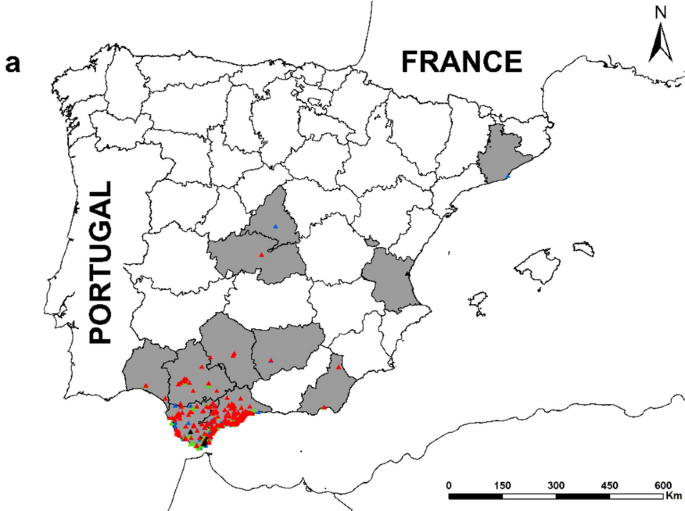
Regarding the bicolor hornet, only nine records were previously known in mainland Spain. Through this new study and the contributions uploaded to citizen science platforms, there are now 48 documented records. While the species had previously only been detected in the province of Málaga —where it continues a slow expansion— a new record has now been confirmed in Granada.
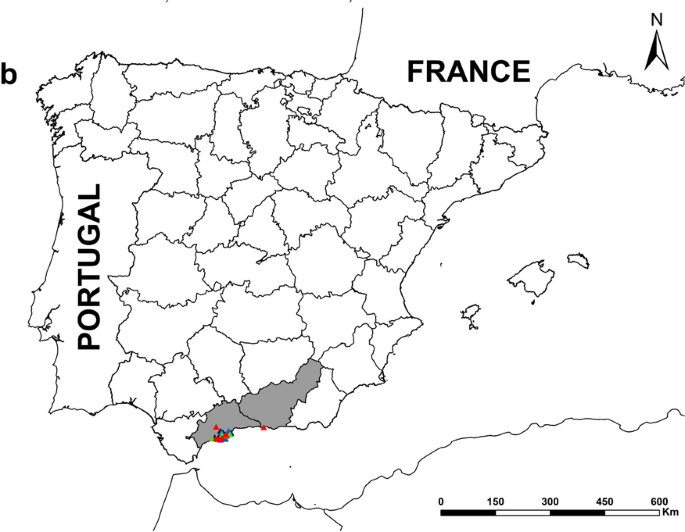
Moreover, the study documents new records of the Asian hornet in the provinces of Cádiz and Huelva, representing the southern most known sightings for this species within its non-native range; this reveals a continuous southward expansion. In the case of the record in Bornos (Cádiz) —which involved an active nest— intervention by the authorities led to its removal, aimed at preventing further spread.
The risks of expansion
The expansion of invasive Vespa species across the Iberian Peninsula poses a multifaceted threat with ecological and socioeconomic implications. Key risks include the disruption of local ecosystems and significant impacts on economic sectors such as apiculture and agriculture.
“Since they feed their larvae with other insects and prey upon native pollinators, their impact could ultimately deplete the communities of species that play a fundamental role in our ecosystems,” Robla explains. The decline in pollinators may indirectly affect biodiversity, the regenerative capacity of numerous plant species, and agricultural productivity.
In addition to these ecological consequences, there is the potential for economic harm. Invasive wasps attack apiaries, leading to losses in honey production and causing damage to fruit crops. While they do not pose a significant public health risk to the general population, researchers warn that occasional stings may occur.
The study underscores the critical importance of ongoing monitoring and research to better understand the invasion dynamics and ecological implications of these species within the Iberian Peninsula and across Europe. To this end, citizen science platforms could serve as a vital tool for tracking their expansion.
Examples of such initiatives include applications and portals like iNaturalist and Observation.org, where anyone can upload photographs and locations of animals or plants observed in the wild. In the case of wasps within the genus Vespa, these records provide scientists with real-time data on new occurrences and potential shifts in distribution.
“It allows us to detect a larger number of individuals. Essentially, it means having more eyes on the ground, especially for species like these that are easily distinguishable by the general public, although we must account for their limitations and potential biases”, Robla concludes.
Reference
Jairo Robla, Álvaro Pérez-Gómez, Florent Purnier, Blauenn Donnard, Jorge Monje. Buzzworthy invasions: new data on alien Vespa (Hymenoptera, Vespidae) hornets in southern Spain. Biological Invasions. https://doi.org/10.1007/s10530-025-03717-y