Wintering bird numbers in Doñana rebound in 2026 after years of record lows
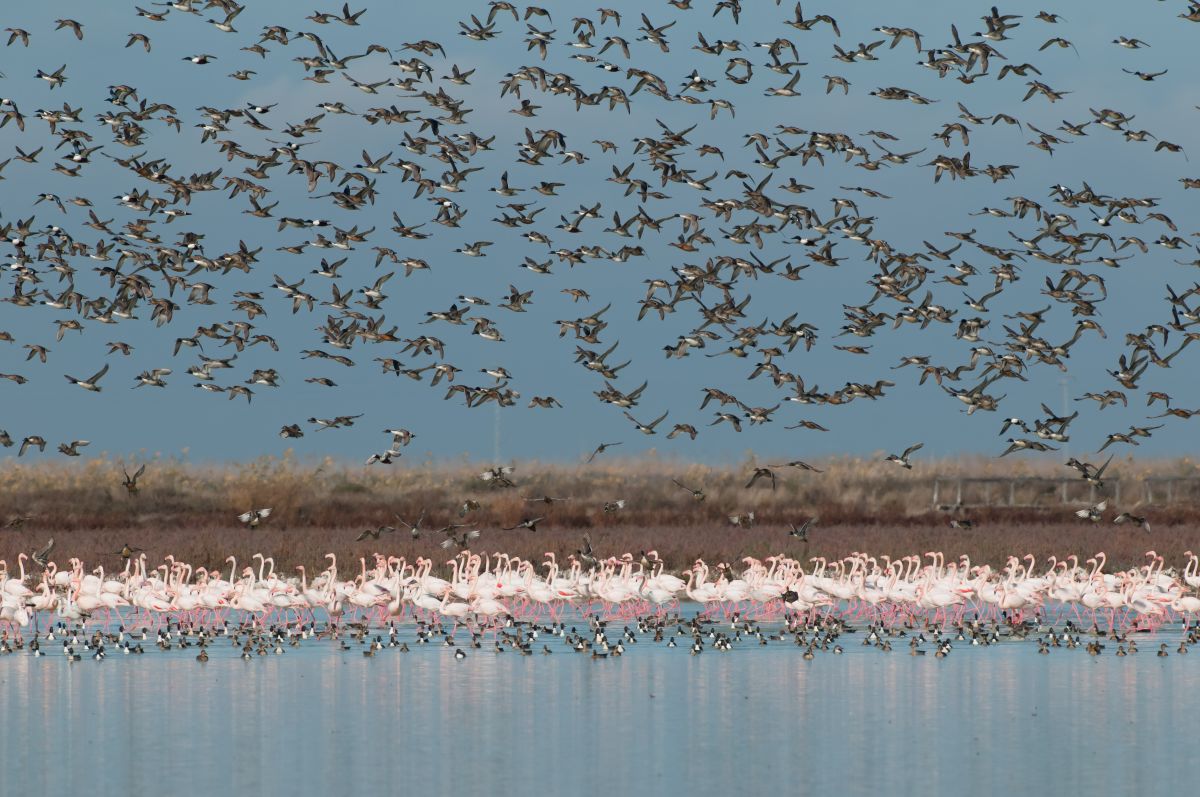
Large flocks of Northern Pintails and Northern Shovelers in the Doñana Natural Area. (Photo: Rubén Rodríguez Olivares).
During January 2026, waterbirds experienced a notable recovery in the Doñana Natural Area and other surrounding areas of the Guadalquivir marshes. The Bird Population Team of the Environmental Monitoring Group at ICTS-Doñana recorded 385,649 birds from 88 species during the International Waterbird Census (IWC). This figure is higher than those recorded in the previous two years, when drought led to historic lows in the marshlands.
This census is part of the International Waterbird Census (IWC), coordinated by Wetlands International—a global program that has assessed the status of waterbird populations since 1967 and helps guide international environmental and conservation policies. In the Doñana Natural Area, the count is conducted using a combined methodology that includes aerial surveys by light aircraft, vehicle routes, and roost counts, allowing the entire wetland and its surrounding areas to be covered with high precision. Data recorded using this specific methodology has been collected since 2004, marking a shift from previous years when only aerial census data were included.
The figures for January 2026 remain below the record high set in 1989 —which saw approximately 684,084 birds based solely on aerial surveys— and also below the average of the last 22 years (437,000 individuals) since the current methodology was established. Despite this, the results reflect a positive trend linked to a wetter autumn and winter.
Accumulated rainfall for the 2025-2026 period has already reached 517.6 mm, which is higher than the average for this time of year and also exceeds the figures from the previous year (307.9 mm), when most of the rainfall occurred after the wintering season. This has led to extensive flooding across the marshlands, providing improved conditions for wintering birds and aquatic wildlife in general.
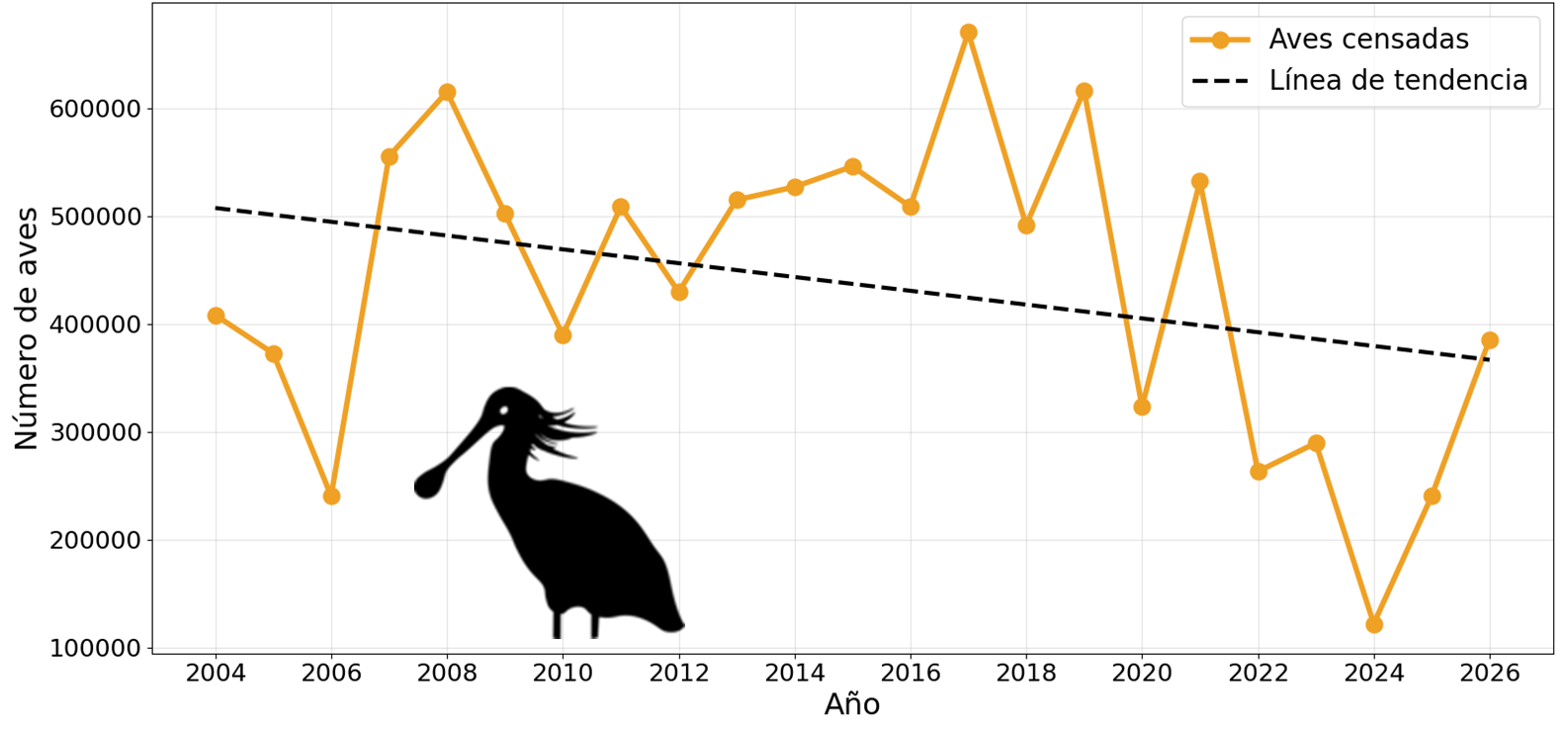
Data collected from the International Waterbird Census (IWC) conducted in the Doñana Natural Area and the surrounding Guadalquivir Marshes since 2004.
Significant increases in key species
The improved hydrological conditions in the marshlands have driven a widespread recovery among several key species—particularly waterfowl, which have responded remarkably to the increased water availability.
The Northern Shoveler (Spatula clypeata), with 120,970 individuals —an increase of over 65,000 compared to the previous year— has once again become the fastest-growing species in Doñana over the last two decades. Similarly, the Common Pochard (Aythya ferina) shows a clear resurgence with 10,600 individuals (an increase of more than 6,200 birds), benefiting from the extensive flooding that favors this diving duck.
Even the Greylag Goose (Anser anser) experienced a slight uptick compared to last year, rising by approximately 1,000 birds to reach a total of 3,700 individuals. Nevertheless, these figures remain a far cry from the historical highs of the 1980s and the first decade of the 2000s, when wintering populations exceeded 80,000. During those periods, Doñana served as their primary winter refuge in the Iberian Peninsula and one of the most important in Europe. These current figures highlight the profound decline of the species as a winter resident in the Doñana Natural Area and its surrounding environs.
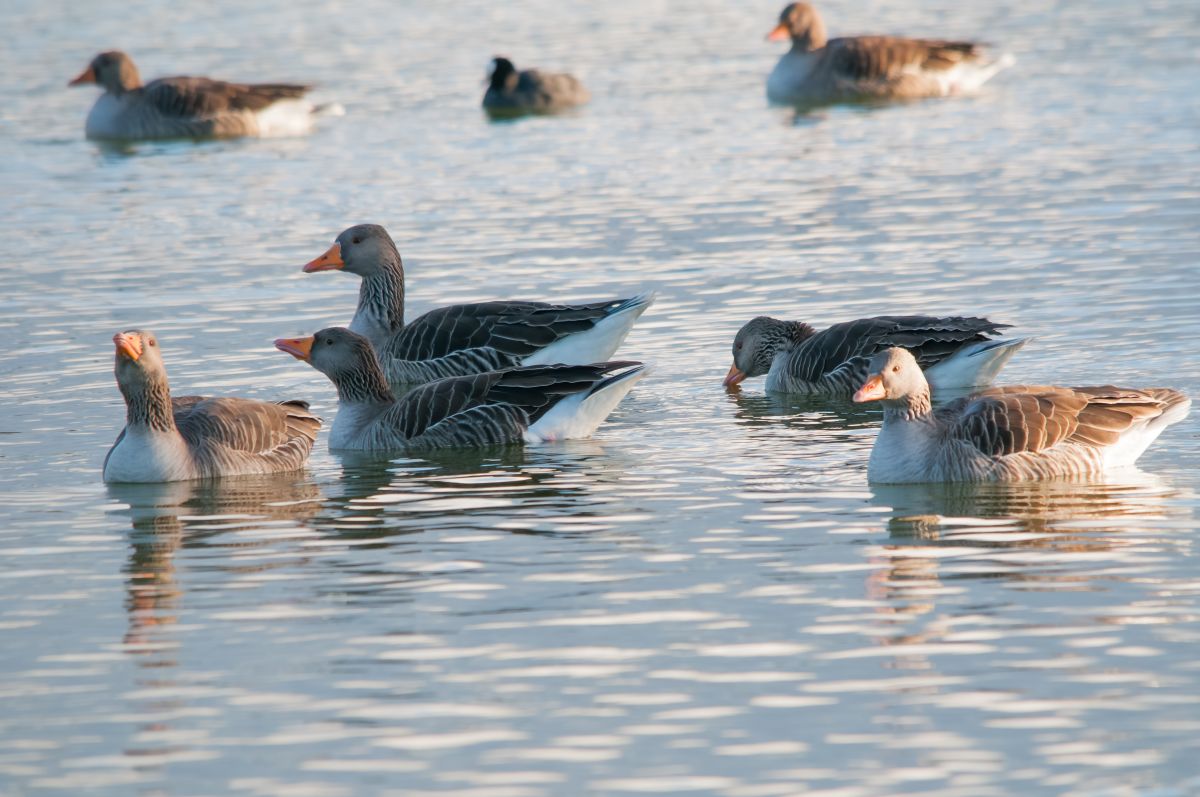
Greylag Goose during the wintering season in the Doñana Natural Area. (Photo: Rubén Rodríguez Olivares).
Other waterbird species have also shown positive responses to the favorable hydrological conditions. The Black Stork (Ciconia nigra), which is extremely rare in Europe during the winter, reached a count of 113 individuals, reinforcing Doñana’s importance as one of the few significant wintering sites for the species. The Glossy Ibis (Plegadis falcinellus), a species highly dependent on both flooded marshlands and water levels in rice paddies, saw one of the most pronounced increases, with 14,900 individuals —an additional 12,000 birds— gathering in large flocks. The Eurasian Spoonbill (Platalea leucorodia) also responded favorably, with 2,200 individuals (over 1,000 more than the previous year) amid conditions highly conducive to its migratory movements. Even the Squacco Heron (Ardeola ralloides), which typically winters in Africa, benefited from this year’s exceptional conditions; its count of 32 individuals represents unusually high figures for the species in this season.
Doñana's hydrological pulse is reflected in its bird populations
The increase in wintering birds recorded this year underscores the direct correlation between Doñana’s hydrological state and its capacity to host aquatic wildlife. Following several years marked by a lack of rainfall and minimal flooding of the marshlands, the improvement recorded this winter demonstrates the wetland's potential for recovery when climatic conditions and water management allow.
“The trends in waterbird populations confirm that Doñana responds immediately when water is available. The recovery of the marshland is essential for the conservation of species with high ecological value and for maintaining this area’s role as one of Europe’s most important wetlands,” highlights Rubén Rodríguez Olivares from the Bird Population Team of the Environmental Monitoring Area at ICTS-Doñana.
About ICTS-Doñana
The ICTS-Doñana, operating under the Doñana Biological Station – CSIC, is Europe’s largest field laboratory and a benchmark for research into biodiversity, ecology, and the impacts of global change. It supports the scientific community by providing accommodation, specialized equipment, laboratories, and technical and logistical assistance.
Within this framework, waterbird censuses in the Doñana Region are co-financed by the Andalusian Environment and Water Agency of the Regional Ministry of Agriculture, Fisheries, Water, and Rural Development, and the Regional Ministry of Sustainability and Environment of the Regional Government of Andalusia (Junta de Andalucía), under the contract for the "Waterbird Census Service in the Doñana Region 2024."
Furthermore, the environmental monitoring program conducted by ICTS-Doñana is part of the monitoring, evaluation, and scientific knowledge enhancement measures within the Action Framework for Doñana. This program is coordinated by the Commissioner for the Water Cycle and Ecosystem Restoration of the Ministry for the Ecological Transition and the Demographic Challenge (MITECO).