INTERVIEW | Isabel Salado: "Eliminating wolves destabilizes the entire ecosystem"
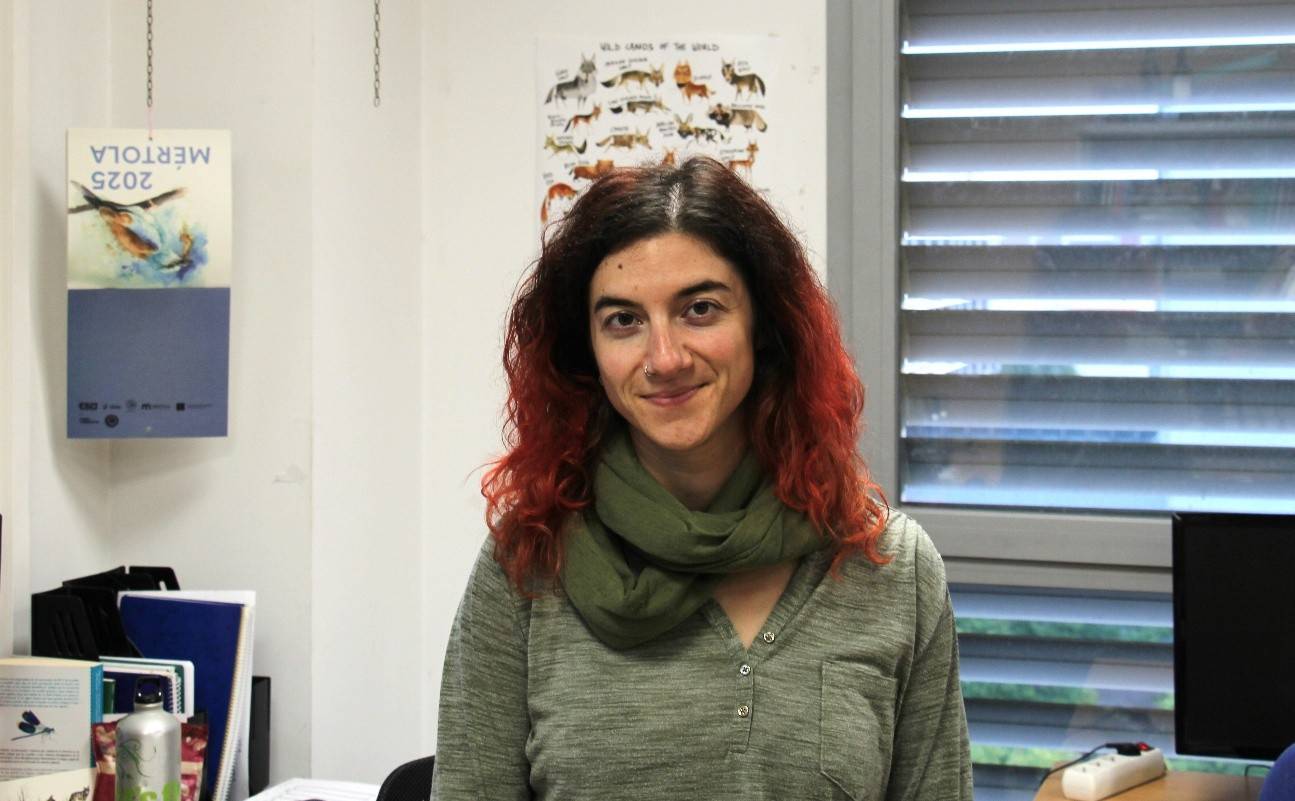
Isabel Salado, CSIC researcher at the Doñana Biological Station.
Since April 2025, wolf hunting has been permitted in Spain north of the Duero River, following a provision included in the Law on the Prevention of Food Loss and Waste.
One of the leading experts on the species' genetic health is Isabel Salado, a biologist at the Doñana Biological Station (EBD-CSIC), a research center of the Spanish National Research Council (CSIC) based in Seville.
Currently, she is continuing her postdoctoral research into the evolution and diversity of this apex predator, a fundamental element in maintaining ecosystem balances throughout Europe.
Question: How important are wolves to our ecosystems?
Answer: Within an ecosystem, the wolf fulfills numerous functions, most notably its role as an apex predator, a large carnivore at the top of the food chain. If the wolf is removed, it triggers a trophic cascade, affecting other species and destabilizing the entire system.
Furthermore, wolves help reduce disease transmission among wild ungulate populations (such as deer, roe deer, and wild boar). In areas where wolves have been eliminated, we run the risk of encouraging higher ungulate densities, which in turn creates a larger reservoir for viruses like African Swine Fever. For our own well-being, it is vital that ecosystems remain as balanced as possible.
Q: Based on genetic diversity, what is the conservation status of the wolf in the Iberian Peninsula?
A: The conservation status is unfavorable. Among other reasons, our latest research shows that the Iberian wolf has lost genetic diversity over the last 50 years. Furthermore, the population is genetically fragmented, and we have found varying levels of inbreeding within the population. In certain areas, such as south of the Duero River, related individuals are interbreeding, likely because individuals from other packs are not reaching those areas.
We do not yet have evidence of what is known as inbreeding depression, the negative consequences for offspring resulting from mating between related individuals over several generations. However, just because it hasn't been documented here doesn't mean it isn't happening in the Iberian Peninsula. We have observed this in other populations; for instance, in Scandinavia, bone deformities and reproductive issues have been well-documented.
Q: Does the division between the north and south of the Duero River make sense from a genetic perspective?
A: It is a completely arbitrary division. In my view, managing the species at a national level doesn't even make sense because, for instance, there are packs shared between Portugal and Spain; this results in them having different levels of protection depending on which side of the border they are on.
Ultimately, the level of protection should be consistent across the entire Iberian population. Furthermore, the Duero River is not a major dispersal barrier, as we have evidence of wolves crossing rivers.
Added to all of this is an "invisible threat": even if a population recolonizes an area, it doesn't mean it is safe in genetic terms. Genetic recovery can take decades, or even hundreds of years.
Q: How does wolf hunting north of the Duero affect the species' conservation?
A: It is exactly the opposite of what is recommended. To improve their conservation status, the ideal approach would be to foster connectivity, as the Iberian population is isolated from other European clusters. The fastest mechanism to increase genetic diversity is to enhance connections with other populations through dispersing individuals, typically young wolves between one and two years old.
However, these are the very individuals with the highest probability of human-caused mortality (vehicle strikes, poaching, or recreational hunting) as they move from one area to another. Consequently, we are likely losing the specific individuals capable of connecting populations, reducing fragmentation, and contributing to the recolonization of new territories.
Q: What measures would facilitate the dispersal and connectivity of the Iberian population?
A: The most fundamental step is to stop culling individuals, as well as to identify and protect potential ecological corridors that allow wolves to recolonize areas they historically inhabited.
Furthermore, ending such fragmented management would be beneficial; currently, management strategies vary by autonomous community and even by province. Taking it a step further, a higher level of international coordination is essential, given that the scale at which large carnivore populations move is often continental.
Q: How long does it take for the wolf to colonize new areas?
A: It depends. The species itself possesses a very high dispersal capacity, yet it is clearly struggling in the Iberian Peninsula. Conversely, we have examples like Germany, where there were no wolf packs twenty years ago, and today there are approximately 200 groups.
In other words, we are dealing with a species with a remarkable ability to recolonize because it can travel long distances; however, we still do not know why this isn't happening in our territory. While infrastructure certainly has an impact, I believe it may be more closely related to our management strategies and, perhaps, to some genetic characteristic that we have yet to explore.
Q: Can there be such a thing as wolf overpopulation?
A: No, because the wolf and other large predators are dependent on the prey availability in their territory. Furthermore, the species operates in packs with a single breeding pair; that is, within each group, not every individual reproduces, only two do. Because they are highly territorial, two different packs cannot occupy the same space.
In North America, there are inter-pack conflicts that can result in fatalities; however, in more humanized landscapes like Europe, the majority of mortality is caused by humans. Even under natural conditions, overpopulation of large carnivores is impossible due to their territoriality and their internal mechanisms for reproductive regulation.
Q: What measures would prevent the culling of individuals related to livestock farming?
A: First of all, I disagree with the notion that wolves "kill for the sake of killing". Hunting involves significant risk for them; therefore, they prey primarily to feed themselves and their pups.
On the other hand, domestic livestock is undoubtedly much more vulnerable, for a wolf, preying on a wild boar is not the same as preying on a sheep. However, we can implement preventive measures to reduce livestock damage, such as fencing, livestock guardian dogs (LGDs), and shepherding, which have proven to be the most effective tools.
In short, while domestic livestock is more vulnerable than wild ungulates —who defend themselves with antlers or tusks— we can take steps to ensure the level of protection for domestic animals is comparable to that of wild ones.
Q: What positive effects would the recovery of the wolf have for the local population?
A: The wolf keeps both ungulate populations —and the diseases associated with them— under control, as well as mesopredators (medium-sized carnivores or omnivores located at an intermediate level of the food chain), such as foxes.
Q: What is the future of the wolf in Spain and Europe?
A: We hold the dubious honor of being home to one of the few populations to have gone extinct in recent decades. While wolf populations across the rest of Europe were expanding or recovering, in the Iberian Peninsula, they remained stable in the northwest, but the Sierra Morena population in the south became extinct. This conservation failure raises a critical question: What kind of management are we practicing compared to other species?
The situation is highly complex. From a research standpoint, we continue to document the conservation and genetic status of different populations. However, public opinion regarding the wolf is becoming increasingly polarized, and management processes are being altered for reasons that are not grounded in scientific evidence.
By Fermín Grodira / Content produced as part of the CSIC – BBVA Foundation Scientific Communication Grants, 2024 Call.