10.4% of Europe’s bee species are endangered. While honeybee populations are on the rise, wild bees are in decline
The decline of pollinators, such as bees and other insects, is estimated to have slashed global fruit yields by 25% and nut production by more than 20%
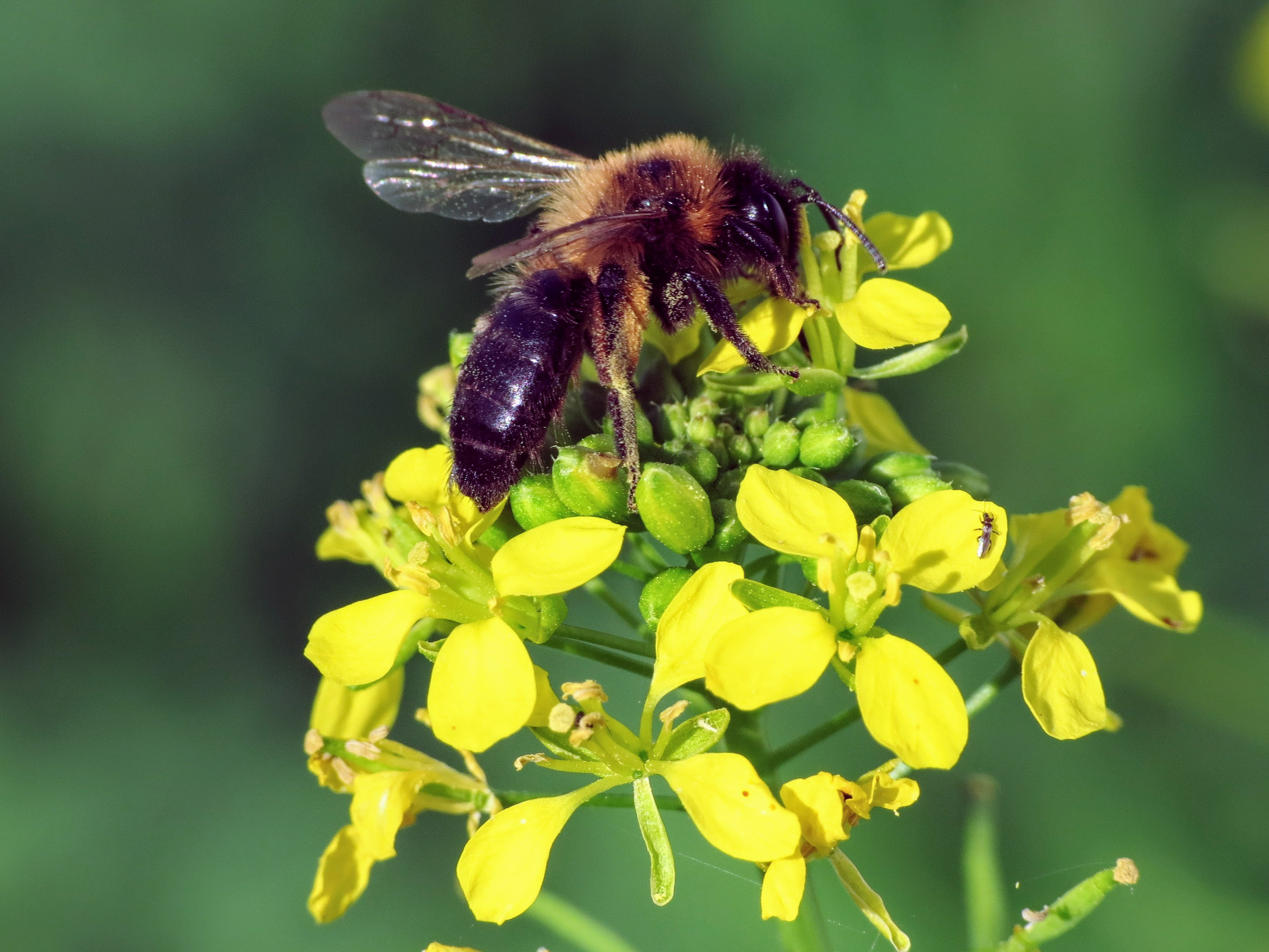
Andrena thoracica, a solitary bee belonging to the family Andrenidae. Photo credit: J. Manuel Vidal Cordero
British naturalist David Attenborough once noted that pollinators are more than just allies to farmers, they are the invisible guardians of our biodiversity. Nearly 90% of flowering plants are pollinated by animals, relying wholly or in part on them to produce seeds. For crops like melons, cocoa, kiwis, watermelons, and vanilla, their role is directly essential.
The decline of pollinators is estimated to have slashed global fruit yields by 25% and nut production by over 20%. This could lead to roughly 1.4 million additional human deaths and illnesses from malnutrition each year, according to Anna Traveset, a Research Professor at the Spanish National Research Council (CSIC) based at the Mediterranean Institute for Advanced Studies (IMEDEA, CSIC-UIB). She outlines these findings in her book The Pollinator Crisis (La crisis de los polinizadores), part of the 'What Do We Know About?' collection co-published by CSIC and Los Libros de la Catarata.
Yet, one of the lesser-known drivers behind the decline of pollinators is the honeybee itself (Apis mellifera).
Bee diversity
Roughly 350,000 species of vertebrates and invertebrates are estimated to carry pollen, though Traveset points out that many species, particularly insects, have yet to be discovered by science. Meanwhile, at least one-third of all insect species are currently threatened with extinction.
According to 2026 data for Europe, the conservation status of 14.3% of described bee species remains unknown, while 10.4% are already threatened with extinction. Conversely, global populations of the managed honeybee —a domesticated species— are rising to keep pace with intensive agriculture, a sector increasingly reliant on pollinators. Yet, as wild bees continue to decline, this shift presents a paradox: the domestic honeybee is an inefficient pollinator for many plant species. Consequently, this mismatch could exacerbate pollination deficits, ultimately driving down yields for crops that depend on these insects.
“Spain is home to more than a thousand different bee species, making it one of the region's top biodiversity hotspots. Every single one contributes to pollination and is vital, even though they don't build hives or produce honey,” explains Ignasi Bartomeus, an ecologist and researcher at the Doñana Biological Station (EBD), a CSIC research institute in Seville.
Over 90% of all bee species are solitary, lacking both queens and caste systems, though they occasionally form colonies. Notable among them are bees from the genus Osmia, which produce neither honey nor wax, yet are far more efficient at pollinating apple, pear, almond, and peach orchards than Apis mellifera. In fact, wild, unmanaged bees are responsible for pollinating 46% of all crops.
Intensive farming and invasive pollinators
The primary drivers of the pollinator crisis include land-use changes —which lead to habitat loss and fragmentation— environmental pollution from pesticides and other agricultural inputs, climate change, and invasive species. Specifically, intensive farming and monocultures drastically reduce the floral resources available to pollinators. This habitat degradation and landscape alteration favor generalist species like Apis mellifera over specialists, which depend on a single plant species or a specific habitat to survive. In her book, Traveset points out that insecticides, alongside certain fungicides and herbicides used in industrial agriculture, severely impact pollinator health.
Furthermore, introducing non-native varieties of Apis mellifera and bumblebees triggers population mixing and hybridization. “The consequences can be highly detrimental to native populations,” warns Bartomeus. “Investing in natural habitats and healthier landscapes can yield the same agricultural benefits while supporting native bumblebee populations and reducing the risk of disease transmission,” the scientist explains.
Meanwhile, introducing managed bees for crop pollination and honey production drives fierce competition for pollen and nectar, while raising the risk of pathogen transmission, including the Varroa destructor mite, a known virus carrier. “Human activities have intensified parasite and pathogen pressures on bees by dispersing bacteria, viruses, fungi, and mites globally. Concentrating pollinator interactions within the few remaining natural floral patches in these intensive landscapes could significantly heighten the risk of pathogen exposure,” the IMEDEA researcher explains.
The impacts of beekeping
Another consequence of "micro-livestock farming" —as Bartomeus terms the management of honeybees— is the disruption of the structure and function of plant-pollinator networks. Driven by widespread beekeeping, the overwhelming relative abundance of honeybees disrupts the functioning of pollination webs in natural ecosystems and drives down wild pollinator diversity.
This was the conclusion of a 2019 study co-authored by Pedro Jordano, a Research Professor at EBD-CSIC: “High-density beekeeping in natural areas appears to have lasting and more severe negative impacts on biodiversity than previously assumed.” Another EBD study involving Jordano analyzed the impact of introducing Apis mellifera into Teide National Park. The findings revealed a substantial decline in wild pollinator diversity, alongside a reduction in the reproductive success of the plant species most frequently visited by the domestic honeybee.
Over the last 50 years, managed honeybees have gradually replaced wild species across the Mediterranean. “This trend is deeply concerning because it could jeopardize fruit and seed production for many Mediterranean plants,” adds Anna Traveset. “Honeybees can only complement the pollination services provided by wild insects, they can never fully replace them.” Furthermore, a 2023 meta-analysis co-authored by Ignasi Bartomeus demonstrated that declining pollinator diversity severely impacts both fruit and seed yields, as well as fruit size, with the most pronounced consequences seen in cultivated crops.
While global managed honeybee hives have surged by 45% since 1961, agricultural demand for pollinators is rising at a much faster pace. This acceleration is driven by the expansion of intensive farming and crops —such as fruits, vegetables, and nuts— that rely heavily on animal pollination. This growing mismatch between pollination demand and domesticated bee supply underscores the urgent need to protect wild pollinator diversity and prioritize their conservation.
Since domestic bees are agricultural animals and not part of natural ecosystems, “crop pollination by these bees cannot be considered an ecosystem service. Beekeeping is an agricultural activity and should not be confused with wildlife conservation,” indicates Traveset’s book. Of course, there is a big difference between small-scale beekeeping, which with a habitat in good conditions, good floral patches, and flower diversity is “an activity that coexists perfectly with nature”, and operations with millions of hives. As Bartomeus explains, “large beekeepers need to move their millions of hives because the flowers in a single place are not enough,” which generates great competition for wild bees.
The solutions
While the proximity of crops to natural areas increases both pollinator visitation and diversity, crop diversification alone does not guarantee optimal pollination; it must be coupled with other pollinator-friendly practices. One such approach is organic farming: the larger the agricultural landscape managed without agrochemicals, the greater the diversity and abundance of bees.
Traveset summarizes that the most effective restoration measures for habitat connectivity include enhancing habitat heterogeneity and fostering nesting sites by leaving plant debris and unplowed ground. Other key actions involve reducing or eliminating pesticide and herbicide use, rotating and diversifying crops, and maintaining cover crops and wildflower strips both within fields and along roadside verges where ruderal flora thrives. Ultimately, these practices “boost crop yields and produce higher-quality fruit,” Traveset concludes.
Content produced by Fermín Grodira under the CSIC-BBVA Foundation Scientific Communication Grants Program (2024 Call).