The rehabilitation conditions of bear cubs influence their behavior after returning to the wild
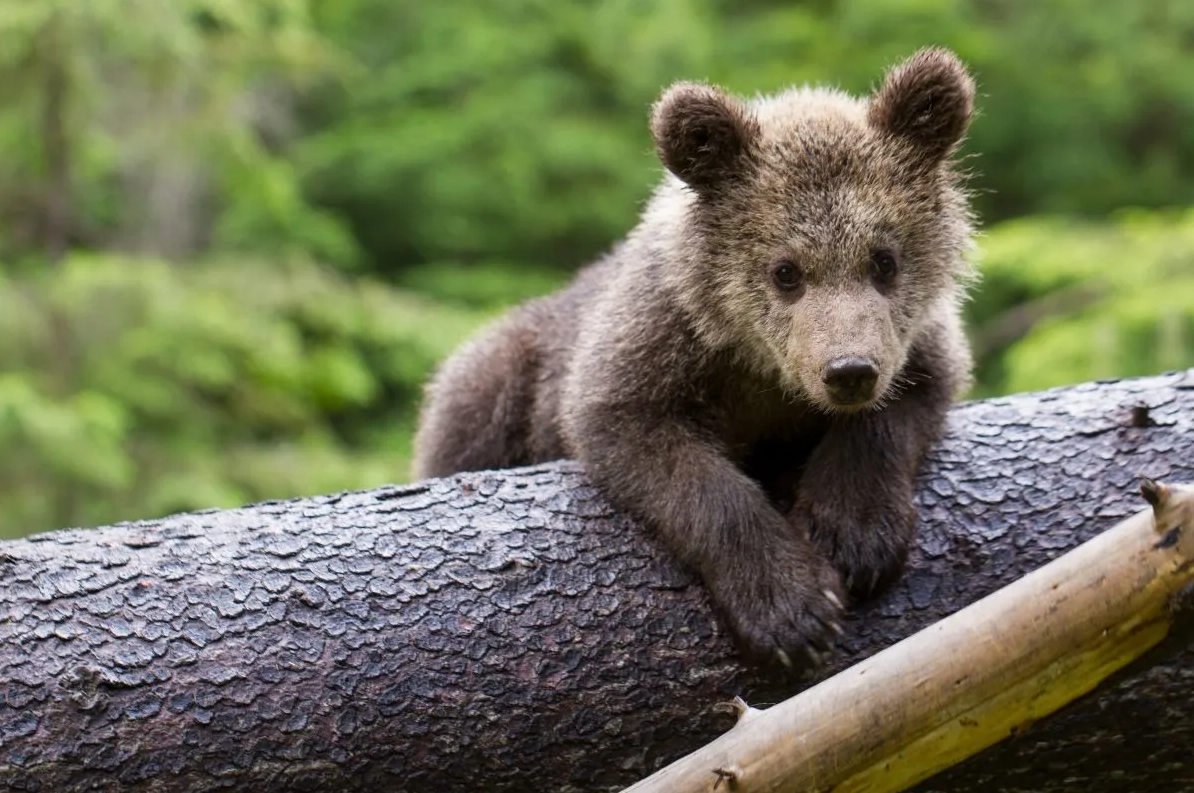
An international study involving the Doñana Biological Station reveals that rehabilitation conditions influence how orphaned bear cubs move and use the landscape after their release. The study has been published in the Journal of Applied Ecology and involved collaborations among universities, research centers, public administrations, and conservation organizations from several European countries.
An orphaned bear cub's return to the wild cannot be evaluated solely by its post-release survival. The way it moves, the areas it frequents, and its response to factors associated with human activity also reveal how it is adapting to life in the wild. The findings of this new research show that certain decisions made during rehabilitation leave a detectable mark on the animals' subsequent behavior.
The research gathered data on 30 brown bears released between 2007 and 2022 in Spain, France, Italy, Greece, Bulgaria, and Romania. The research team analyzed over 8,000 locations obtained via tracking devices and correlated them with the animals' age and sex, the duration of their stay in rehabilitation, their age at release and whether they were raised alone or with other cubs.
Differences between rehabilitated and wild bears
In general, the bears preferred areas near forests and shrublands with more rugged terrain, a pattern similar to what is observed in wild bears. They also avoided agricultural areas during the day and showed no active preference for locations near population centers.
However, differences related to rehabilitation conditions emerged. Animals that had spent more time in captivity tended to use areas farther away from forests and shrublands. Cubs raised alongside other individuals moved faster and used areas farther from the forest and closer to roads than those rehabilitated alone. Proximity to roads does not necessarily imply that the bears were attracted to human-influenced environments, as many of these roads traverse natural and sparsely populated landscapes. This result could reflect a higher tolerance for linear infrastructure or a broader use of heterogeneous landscapes.
Age at release was also linked to movement: animals released at an older age moved faster. Additionally, males moved faster than females, whereas females tended to use areas closer to forests and shrublands.
The importance of monitoring the behavior of rehabilitated individuals
"An animal can survive after being released and yet show significant differences in how it moves or uses territory. Therefore, rehabilitation success should not be evaluated solely through survival or the absence of conflict, but also through behavioral indicators", explains Lara Naves-Alegre, lead author of the study, currently a researcher at the University of Granada and affiliated with the Miguel Hernández University of Elche during the development of the research.
During the monitoring period, no deaths or recaptures were recorded for 26 of the 30 individuals. Two bears died of unknown causes and two others were recaptured and returned to captivity after showing signs of habituation to humans, although neither had been involved in conflict situations. Wildlife rehabilitation makes it possible to return orphaned, injured, or displaced animals to the wild—animals that might otherwise remain in captivity or be euthanized. In long-lived species such as the brown bear, early life experiences can be particularly relevant, as wild cubs spend an extended period with their mothers, during which they learn to forage, navigate, and respond to potential risks.
The findings support incorporating spatial and behavioral indicators into post-release tracking. They also highlight the need to systematically record factors such as time spent in captivity, age and weight at release, rearing conditions, behavioral development, and response to environments associated with human activity. Furthermore, the authors propose moving toward more comparable protocols among European rehabilitation centers. Greater standardization would facilitate the evaluation of different practices and allow management decisions to be tailored to the characteristics and needs of each individual.
Reference
Naves-Alegre, L., Karamanlidis, A. A., Beecham, J., Bereczky, L., González-Borrajo, N., Jiménez-Senen, I., Latini, R., López-Bao, J. V., Mateo-Tomás, P., Naves, J., Quenette, P.-Y., Steinmetz, J., Todorov, V. R., Tuñón, J., Zaharieva, R., & de Gabriel Hernando, M. (2026). From captivity to the wild: Rehabilitation conditions influence habitat selection and movements of orphaned brown bears in human-dominated landscapes. Journal of Applied Ecology, 63, e70490. https://doi.org/10.1111/1365-2664.70490