Academic precarity is constraining scientific creativity, especially at the beginning of a research career
These dynamics may be slowing scientific progress and the search for solutions to global challenges, with particularly pronounced effects on younger researchers.
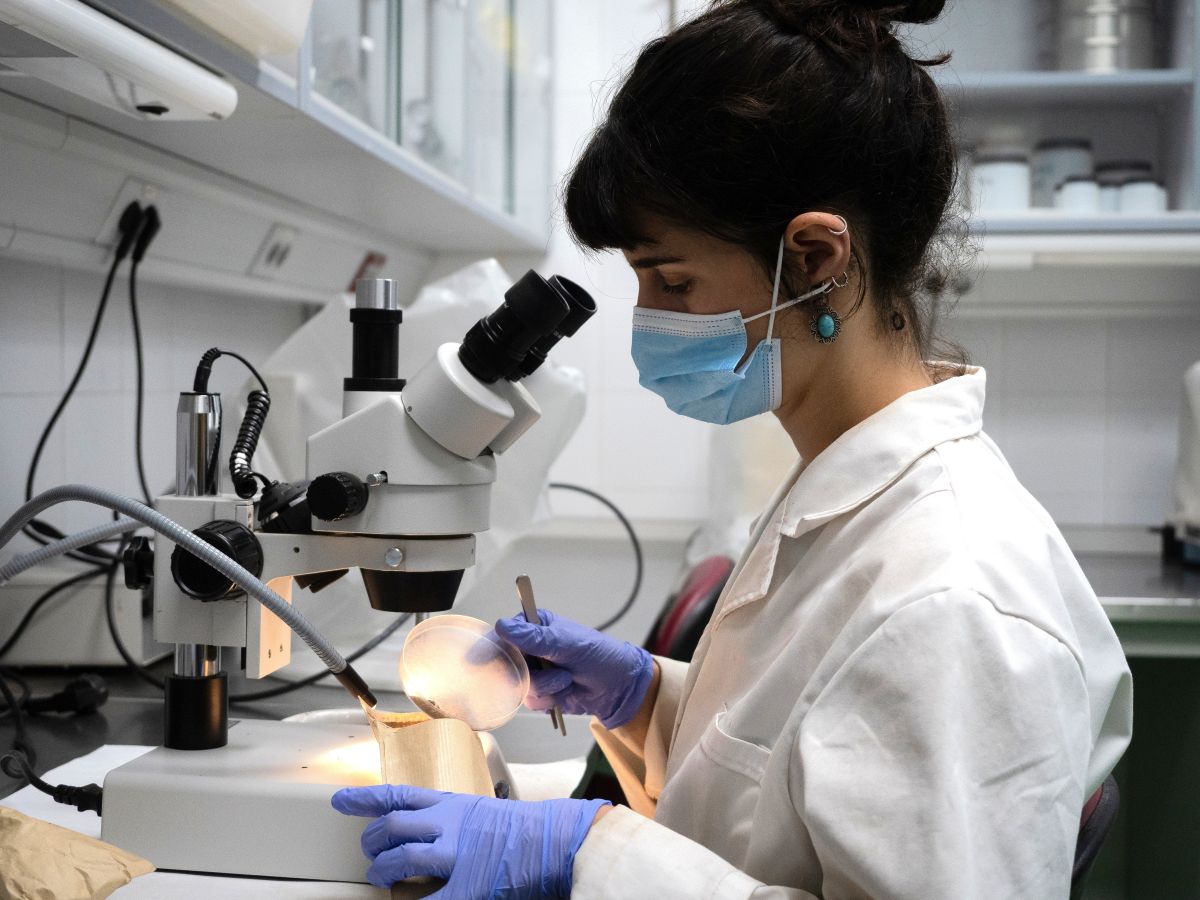
A predoctoral researcher at the Doñana Biological Station - CSIC. Credit: Joaquín Alonso. EBD-CSIC
An article published in the journal Nature Human Behaviour analyzes how current academic structures may be limiting scientific creativity, particularly among researchers in the early stages of their careers. Drawing on the available scientific literature, the authors examine how job insecurity, short funding cycles, and research evaluation systems based on scientific productivity are favoring predictable research focused on rapid results over riskier and conceptually innovative projects.
The article is authored by researchers from the Doñana Biological Station (EBD-CSIC), the University of South Bohemia in České Budějovice (Czech Republic), and the University of Minho (Portugal), among other institutions.
“In this article, we approach scientific creativity as an outcome of the institutional environment rather than solely as an individual characteristic,” explains Ismael Soto, a researcher at the Doñana Biological Station and co-author of the article. “The current system may favor quantity over originality, reducing intellectual diversity and slowing scientific progress.”
A system that rewards productivity over originality
Recent controversies surrounding allegations of plagiarism, data falsification, and the use of artificial intelligence have raised a series of ethical questions about the effectiveness of academic evaluation systems. In general, according to the authors, modern academic systems are failing to identify original ideas and tend to reward those who learn to succeed within a logic in which numbers matter more than scientific quality or originality of approach.
This “publish or perish” culture is compounded by job insecurity among researchers, who often face unstable careers and high levels of employment uncertainty. Issues related to current funding systems also play a role, most of which are short-term and prevent the development of projects with greater scope and depth, often disadvantaging more innovative and riskier research.
The authors highlight that the business model of academic journals, based on associated prestige and high publication costs, generates dynamics of inequality that reinforce these pressures. Article processing charges may favor researchers affiliated with well-funded institutions in countries with greater investment in science. Likewise, additional tasks related to teaching, voluntary peer-review work, and increasingly abundant bureaucratic procedures reduce the time available to researchers to explore new ideas and perspectives.
Early-career researchers, the most exposed
Although these dynamics affect the entire scientific system, they have a greater impact on researchers in the early stages of their scientific careers, who are forced to remain dependent on senior researchers for employment opportunities, funding resources, and opportunities to publish their articles.
The consequences are both scientific and personal. More than one-third of predoctoral researchers have reported symptoms of depression and around one-third have experienced anxiety, according to previous studies. At the same time, researchers at the beginning of their careers are increasingly engaged in highly specific tasks within projects led by other researchers, rather than developing independent research programs. Others, faced with limitations on pursuing their own projects, simply decide to leave a scientific career, resulting in a loss of innovative talent within the scientific system.
Rethinking the rules to promote more innovative science
“The findings point to the need to implement longer and more flexible funding models, evaluations that explicitly value originality, and more stable scientific careers. It is also essential to empirically study how different academic systems affect creativity and researchers’ career trajectories,” says Soto.
The authors propose changes at different levels of the scientific system. These include implementing more stable and flexible funding programs, specific programs to support high-risk research, and reducing administrative burdens. They also argue that research evaluation should place greater value on originality, collaboration, and non-linear career paths, rather than relying heavily on the number of publications and the prestige of journals.
The authors conclude that maintaining scientific creativity requires more than individual resilience. As they indicate in the article, it requires an academic system that gives researchers at the beginning of their careers the autonomy, time, and security necessary to pursue innovative and risky ideas, including those that may fail. Without these conditions, science risks rewarding strategies based on conformity over scientific creativity, which could slow scientific progress and undermine the innovation needed to address the systemic challenges arising from global change.
Scientific reference:
Haubrock, P. J., Kouba, A., Soto, I., Abreo, N. A. S., Vilizzi, L., Błońska, D., Tarkan, A. S., De Santis, V., Sousa, R., Nogueira, A. B., Heeren, S., Garrido Nogueira, J., Cano-Barbacil, C., Cremella, B., Strubbe, D., Pereira da Silva, J., Poloni, R., Deschepper, P., Thoré, E. S. J., Misteli, B., Sun, J., Panisi, M., Dudgeon, D., Stamatiadou, V., Galib, S. M., Maes, C., Baso, N. C., Beukema, W., Števove, B., Záhorská, E., Kurtul, I., Kaur, D., Huber, A. F., Halabowski, D., de Assis Guilherme Padilha, J., Balzani, P., Kaya, C., Bayçelebi, E., Mugnai, M., Ahmed, D. A., Saç, G., Aksu, S., Kaya, B. M., Ciftcioglu, M., Jiang, X., Rodríguez-Rey, M., Martín-Forés, I., Gonçalves Leles, S., Pârvulescu, L., Pergl, J., Rossetto, F., Wei, H., Kirichenko, N. I., Briski, E., Gallitelli, L., Britton, J. R., & Everts, T. How contemporary academic structures constrain scientific creativity and hold back Early Career Researchers. Nature Human Behaviour. https://doi.org/10.1038/s41562-026-02575-5