The WildINTEL project invites to take part in the European Camera Trap Project, a new citizen science initiative. Through it, anyone can take a look into Europe’s wild nature, see rare animals in extraordinary situations, and contribute to the development of scientific studies for their conservation.
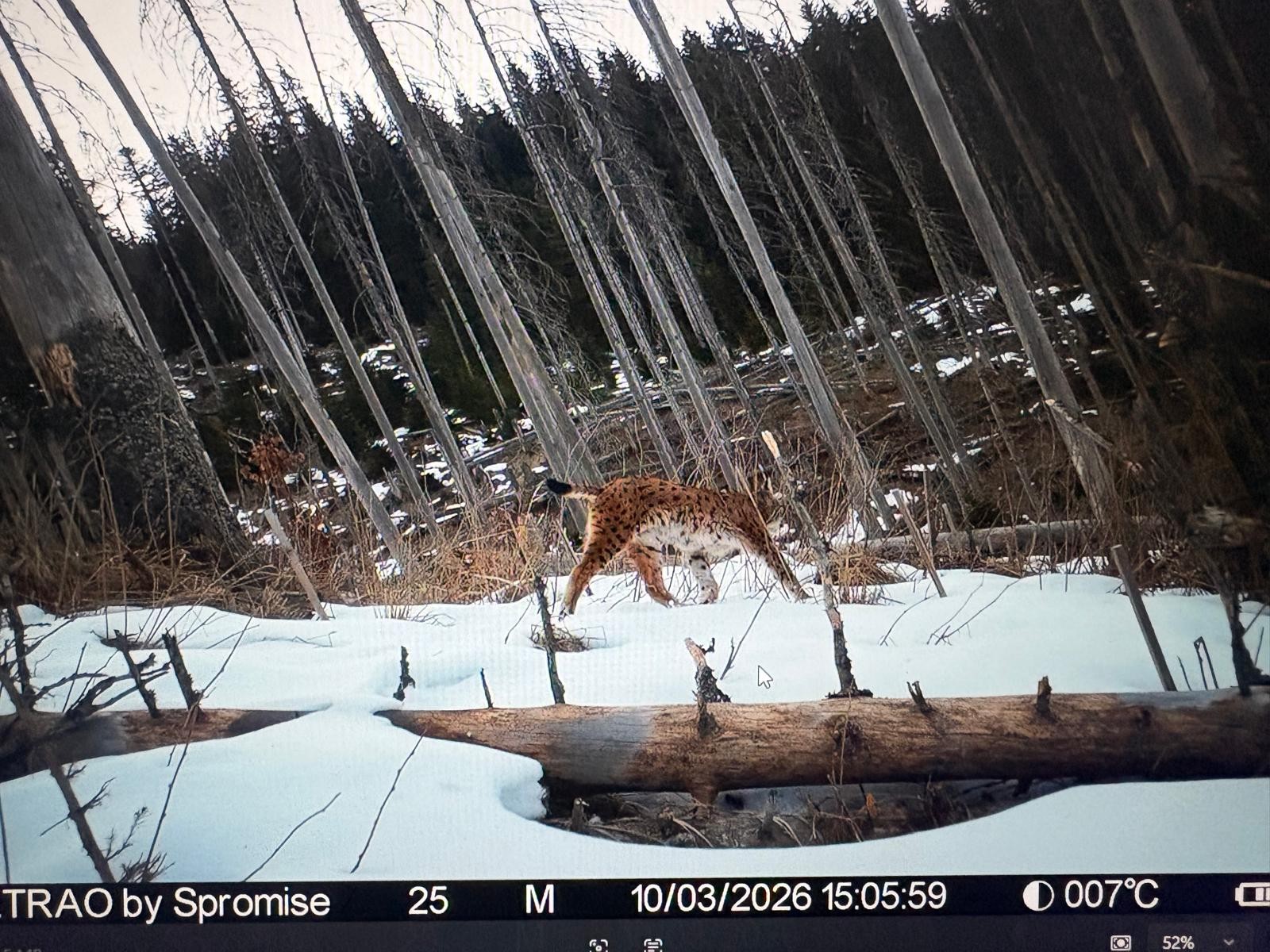
A Eurasian lynx photographed by a WildINTEL camera trap in the Tatra National Park (Poland).
Researchers from the WildINTEL research project have just launched the European Camera Trap Project on the citizen-science platform Zooniverse. The initiative invites volunteers to help identify animals in photographs taken by camera traps installed across various research areas in Europe, including Doñana National Park in Andalusia (Spain), Tatra National Park (Poland), the Oder Delta (Poland/Germany), and Indre Østfold (Norway). WildINTEL is a European project funded under the Biodiversa+ programme and coordinated by the Institute of Nature Conservation of the Polish Academy of Sciences in Kraków.
Camera traps are motion-activated cameras that automatically take pictures when animals pass by. They are widely used by scientists to monitor wildlife populations and study how animals use their habitats. The cameras can capture common species such as red deer or foxes, but also more elusive or endangered, such as the Iberian lynx, the wolf or the brown bear and many other animals that are often difficult to observe directly in the wild.
However, camera traps produce an enormous number of images. Just one monitoring session with 60 camera-traps running for 1-2 months can generate thousands of photographs, creating valuable datasets for studying wildlife distribution, behaviour, and for tracking changes in the animal populations and ecosystems. Processing this high volume of images is a major challenge for research teams, and can delay important conservation actions, which is why your help is needed.
The European Camera Trap Project invites volunteers to help classify these images by identifying the animal species captured on camera. While this task can be challenging, the project provides a Field Guide to assist volunteers, highlighting key features for identifying species and distinguishing between similar animals. This project offers an engaging journey through the diverse wildlife of Europe. By classifying these images, volunteers directly support scientists and conservation stakeholders in analysing the data and improving wildlife monitoring across the continent.
Taking part in the project is a fascinating journey through Europe’s diverse wildlife. By classifying images, volunteers directly support researchers and conservation institutions in analyzing data and improving wildlife monitoring across the continent.
The project builds on the experience of the Iberian Camera Trap Project, which has successfully engaged volunteers since 2021 in helping researchers process large camera-trap datasets. By expanding this approach to multiple European study areas, the European Camera Trap Project aims to create a collaborative effort between scientists and the public to better understand Europe’s wildlife.
Volunteer contributions will also help train artificial intelligence systems that can automatically recognise animals in images. Combining citizen science and artificial intelligence will make it possible to process camera-trap data more efficiently and support large-scale biodiversity monitoring in the future. And this is a very important tool in nature conservation.
Anyone can participate in the project by visiting the Zooniverse platform and helping classify wildlife images. No previous experience is required. Everybody is welcome to explore the project at https://www.zooniverse.org/projects/wildintel/european-camera-trap-project and start identifying animals.