Two new bat species discovered in Cameroon’s tropical forests
The study also confirms the presence of Glauconycteris superba in Cameroon for the first time and provides new data on three other species currently classified as Data Deficient on the IUCN Red List.
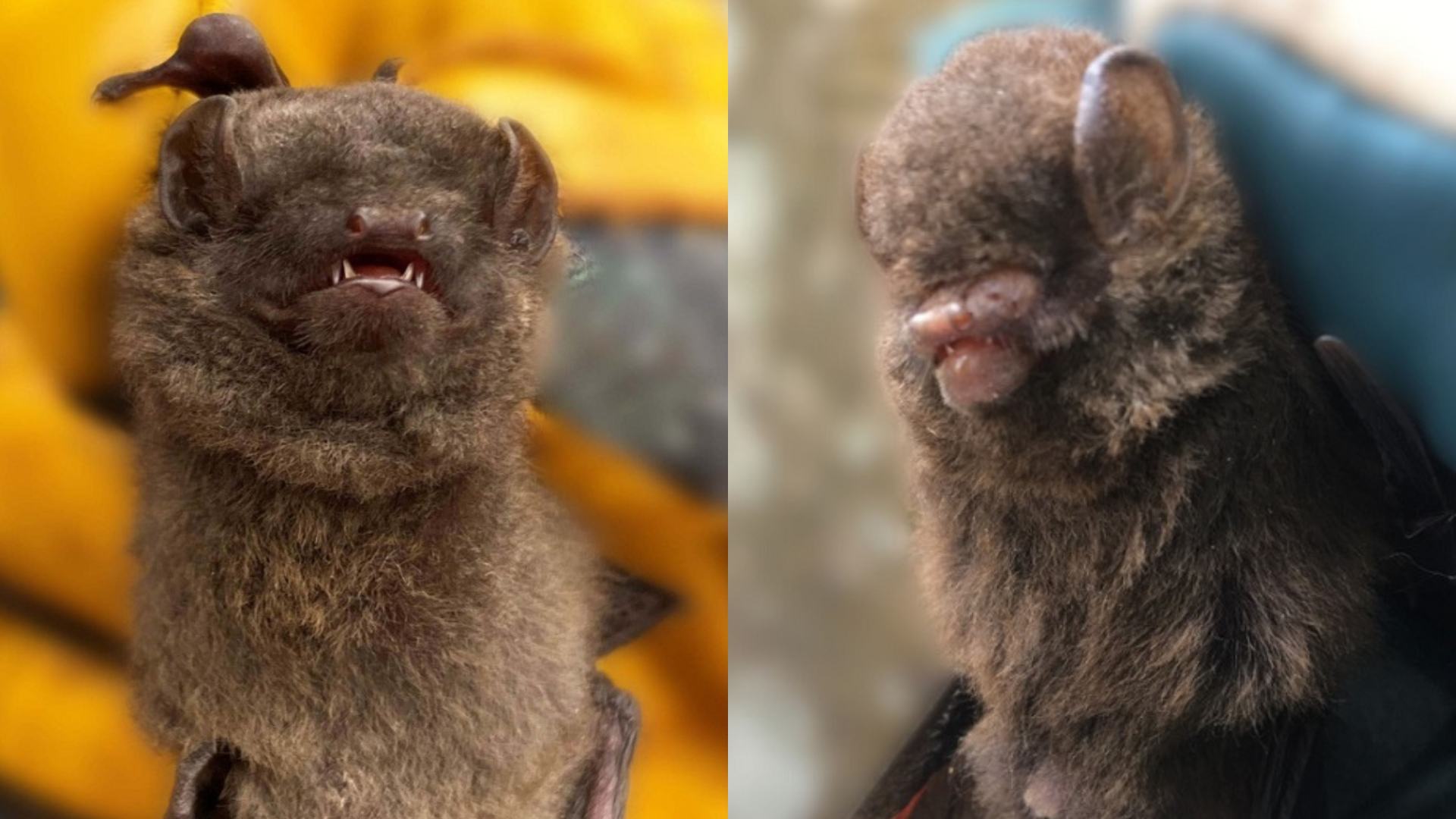
Glauconycteris lobeke (left) and Glauconycteris baka (right)
An international scientific team has described two new bat species to science: Glauconycteris baka and Glauconycteris lobeke. The discovery, resulting from extensive field surveys conducted in southeastern Cameroon, brings the total number of recognized species within this African genus to 15 and highlights the still poorly understood biodiversity harbored by the continent’s tropical forests. The study involved researchers and technical staff from scientific institutions in Cameroon, the United Kingdom, Austria, and Spain, including the Doñana Biological Station of the Spanish National Research Council (CSIC).
The study has been published in the journal ZooKeys and focuses on the genus Glauconycteris, a group of small bats dependent on tropical forests and wooded savannas in sub-Saharan Africa, which has historically been poorly represented in scientific collections.
In total, ten specimens were collected during expeditions carried out in Lobéké National Park and the Dja Faunal Reserve. Subsequent analyses, combining morphological, acoustic, cranio-dental, and molecular data, assigned them to eight species. Comparisons with the holdings of the Scientific Collections of the Doñana Biological Station - CSIC and the use of resources from the Molecular Ecology Laboratory at the same institution were essential for this taxonomic assessment.
Among the species analyzed, two were identified as new to science: Glauconycteris baka, named in honor of the Baka pygmy people who inhabit Lobéké National Park and its surrounding areas, and Glauconycteris lobeke, which takes its name from the same nature reserve.
Other discoveries
Thanks to these surveys, the team recorded the presence of Glauconycteris superba in Cameroon for the first time, representing the eighth known locality for this species across Africa. This observation, which connects known populations in West Africa with those in Central and East Africa, shows that its distribution is much wider than previously thought.
Likewise, the study confirmed that what was previously considered a single species, G. beatrix, is actually a group comprising several species with extremely similar physical appearances (a species complex). This discovery reveals a much greater biological richness than initially estimated for this group. Finally, the study provides the first integrated taxonomic assessment of Glauconycteris in Cameroon and contributes previously unavailable ecological data on three species (G. gleni, G. egeria and G. curryae) currently classified as Data Deficient on the IUCN Red List.
Next steps
The study confirms the exceptional diversity of bats in Cameroon, with more than 120 species, and demonstrates that even well-known genera such as Glauconycteris continue to harbor substantial and previously unknown diversity.
For this reason, intensifying research in poorly explored areas such as Lobéké National Park is essential, not only to document biodiversity but also to ensure that future conservation strategies are based on an understanding of species’ needs.
Reference:
Gomeh-Djame A, Bates PJJ, Juste J, Suarez-Rubio M, Torrent L, García-Mudarra JL, Agodigo Ayangma E, Yettore F, Bilong Bilong CF, Bakwo-Fils E-M (2026) An integrated taxonomic and conservation assessment of Glauconycteris (Chiroptera, Vespertilionidae) in Cameroon, with the description of two new species from the Northwestern Congolian Lowland Forest. ZooKeys 1282: 161-204. https://doi.org/10.3897/zookeys.1282.183038