A conservation program designed to save one of the world's most endangered birds may be producing too many males
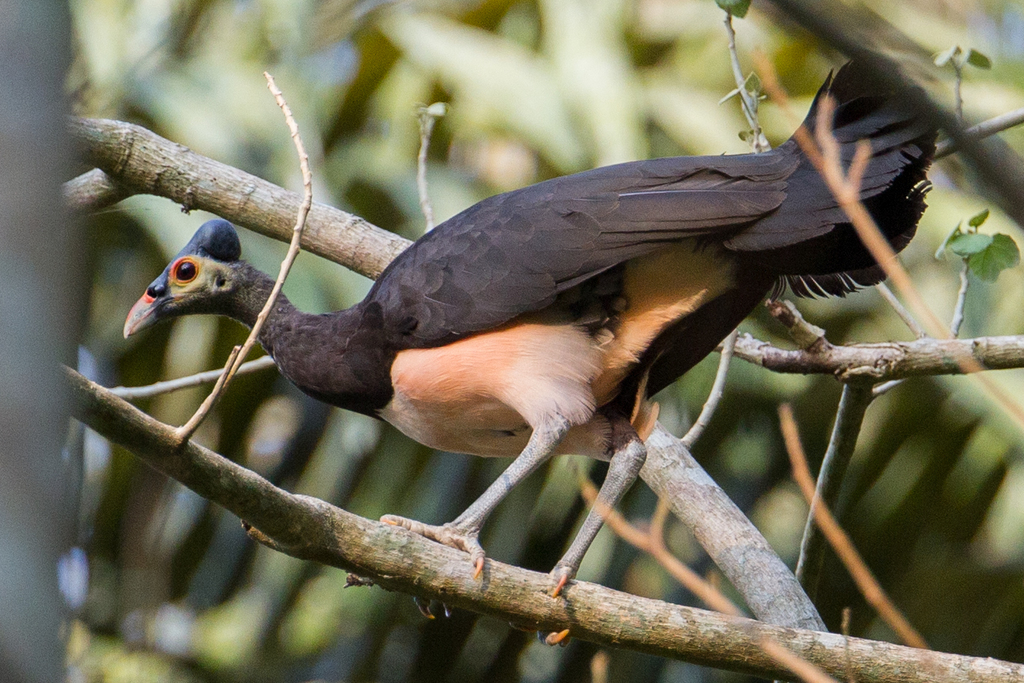
Maleo (Macrocephalon maleo) in Bolaang Mongondow (Indonesia). Credit: christoph_moning (iNaturalist)
Researchers from the Doñana Biological Station (EBD-CSIC) and the University of Granada have identified a potential unintended consequence of conservation programs for the maleo (Macrocephalon maleo), a Critically Endangered endemic bird of the Indonesian island of Sulawesi. The study has just been published in the journal Animal Conservation.
For decades, numerous conservation projects have collected maleo eggs from their natural nests to protect them from human poaching and predators, and incubated them in controlled facilities before releasing the chicks into the wild. This strategy has helped increase the species' reproductive success, which has been severely threatened by the illegal collection of eggs.
However, the newly published study suggests that incubation conditions in these facilities may be altering the sex ratio of the hatchlings. Previous studies on other megapode species have shown that small temperature variations during incubation can result in higher embryonic mortality in one sex than the other.
This hypothesis is supported by data obtained at the Tambun Maleo Sanctuary (Indonesia), where researchers documented a balanced ratio of males and females among chicks hatched from natural nests, while those hatched in incubators showed a marked predominance of males. Although the available sample size is still limited, the results suggest that incubation temperatures may be biasing sex production.
The researchers warn that a population with an excess of males could reduce the effective number of breeding females and slow the recovery of the species, even if the controlled incubation program increases the overall number of individuals.
The team therefore calls for targeted studies to assess the effect of incubation temperature on sex determination in the maleo. The authors emphasize that simple and minimally invasive molecular methods are already available to determine the sex of chicks and embryos from eggshell remains, making it possible to test this hypothesis rapidly and optimize conservation programs.
Reference
Tella, J.L., Sánchez-Prieto, C.B., Romero-Vidal, P., Ruíz-Jimenez, G. and Serrano, D. (2026). Incubation Management Can Skew Population Sex Ratios of the Critically Endangered Maleo. Animal Conservation. https://doi.org/10.1111/acv.70078