A study led by the Doñana Biological Station (EBD-CSIC) reveals that the disappearance of just a few keystone species could profoundly alter seed dispersal networks in tropical ecosystems
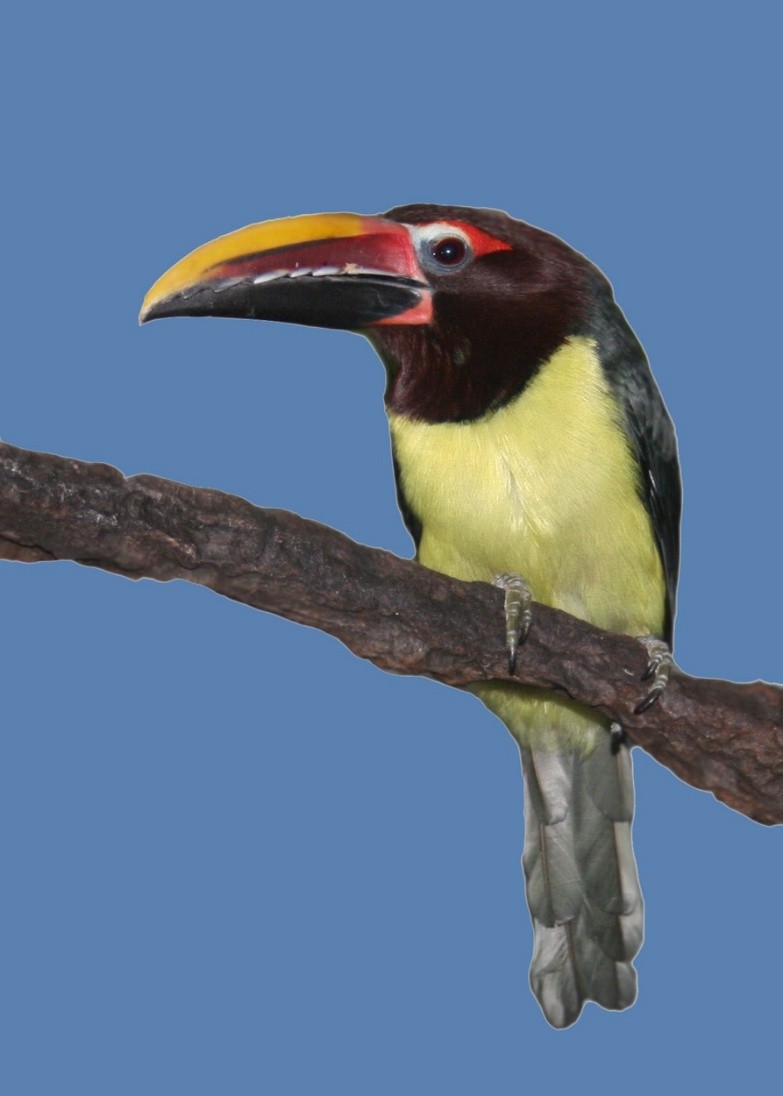
Green Aracari (Pteroglossus viridis). Photo: Sujit Kumar (CC License)
A study by the Doñana Biological Station (EBD-CSIC) and the University of Valladolid reveals the irreplaceable role that frugivorous birds play in forest regeneration and warns of the ecological consequences of their disappearance.
Fruit-eating birds perform an essential ecosystem function by dispersing seeds across the landscape, which promotes forest recovery. However, many of the species responsible for this task—particularly larger ones— are increasingly threatened by habitat loss, hunting, and the illegal wildlife trade.
The study is based on the analysis of 215 ecological networks of bird-plant interactions across tropical and temperate ecosystems worldwide. The research team examined how key avian traits, such as body mass and gape width, influence the way birds interact with fruit-producing plants. Furthermore, through simulations, they analyzed the effect of specific bird species' extinctions on the frugivory network. The results demonstrate that the loss of just a few species with extreme traits could trigger significant shifts in the structure of ecological networks.
"Our results suggest that the disappearance of large-bodied frugivorous birds is not only significant in terms of biodiversity; the extinction of these species also entails the loss of key ecological processes for forest regeneration," states researcher Carlos Martínez Núñez from the Doñana Biological Station, who led the study. "In other words, when these birds disappear, their function as seed dispersal agents cannot always be easily replaced by other species."
The team emphasizes that these species are often the most vulnerable to human pressures, as their populations tend to be smaller, they require more energy to survive, and they are particularly sensitive to hunting and wildlife trafficking, especially since some exhibit striking beaks highly prized in the illegal trade. Consequently, the study underscores the need to implement specific conservation strategies targeting large frugivorous birds, as their loss could trigger cascading effects on ecosystem functioning.
"Protecting these species is especially important in tropical regions, where defaunation associated with hunting and wildlife trade constitutes a serious threat to conservation," underscores Martínez Núñez. "We now know that losing these species can also have significant consequences for the functioning of these ecosystems."
In a context of global change and accelerated biodiversity loss, understanding which species perform unique functions within ecosystems has become a scientific priority. This study provides new evidence that large-bodied frugivorous birds can act as keystone components in maintaining plant diversity and forest resilience.
Reference: Pilar Lafita, Vicente García‐Navas, Rafael Malmagro, Carlos Martínez‐Núñez. Large‐Bodied and Wide‐Beaked Avian Frugivores Show Greater Specialisation in Tropical Seed Dispersal Networks. Global Ecology and Biogeography. https://doi.org/10.1111/geb.70216