07 July 2026
Reducing the mortality of Iberian wolf by 10% would help improve its conservation status
A study led by the Doñana Biological Station (EBD-CSIC) concludes that the high mortality of Iberian wolf explains why their population has remained stagnant in recent decades. Reducing the mortality rate of the Iberian wolf is key to improve the conservation status of the species, classified as “Vulnerable” in Spain and “In danger” in Portugal by the UICN
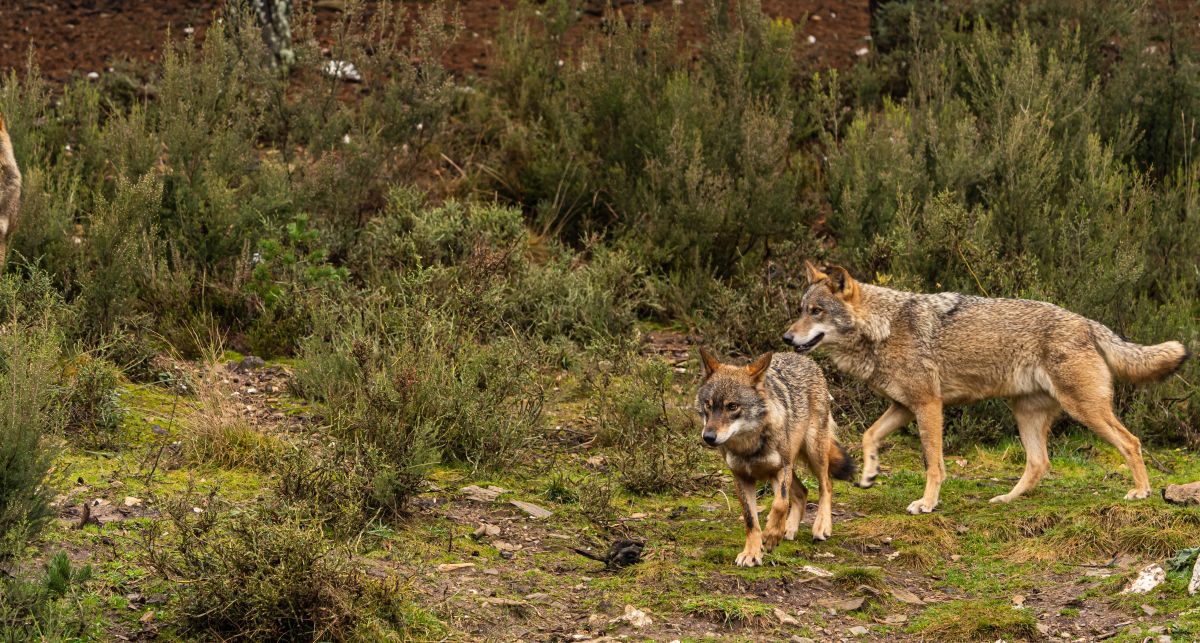
The study reveals that reducing mortality of Iberian wolves living in family group by 10% would result in larger groups, higher reproductive success, and longer dispersal distances. Photo: Alberto Fernández Gil / EBD-CSIC
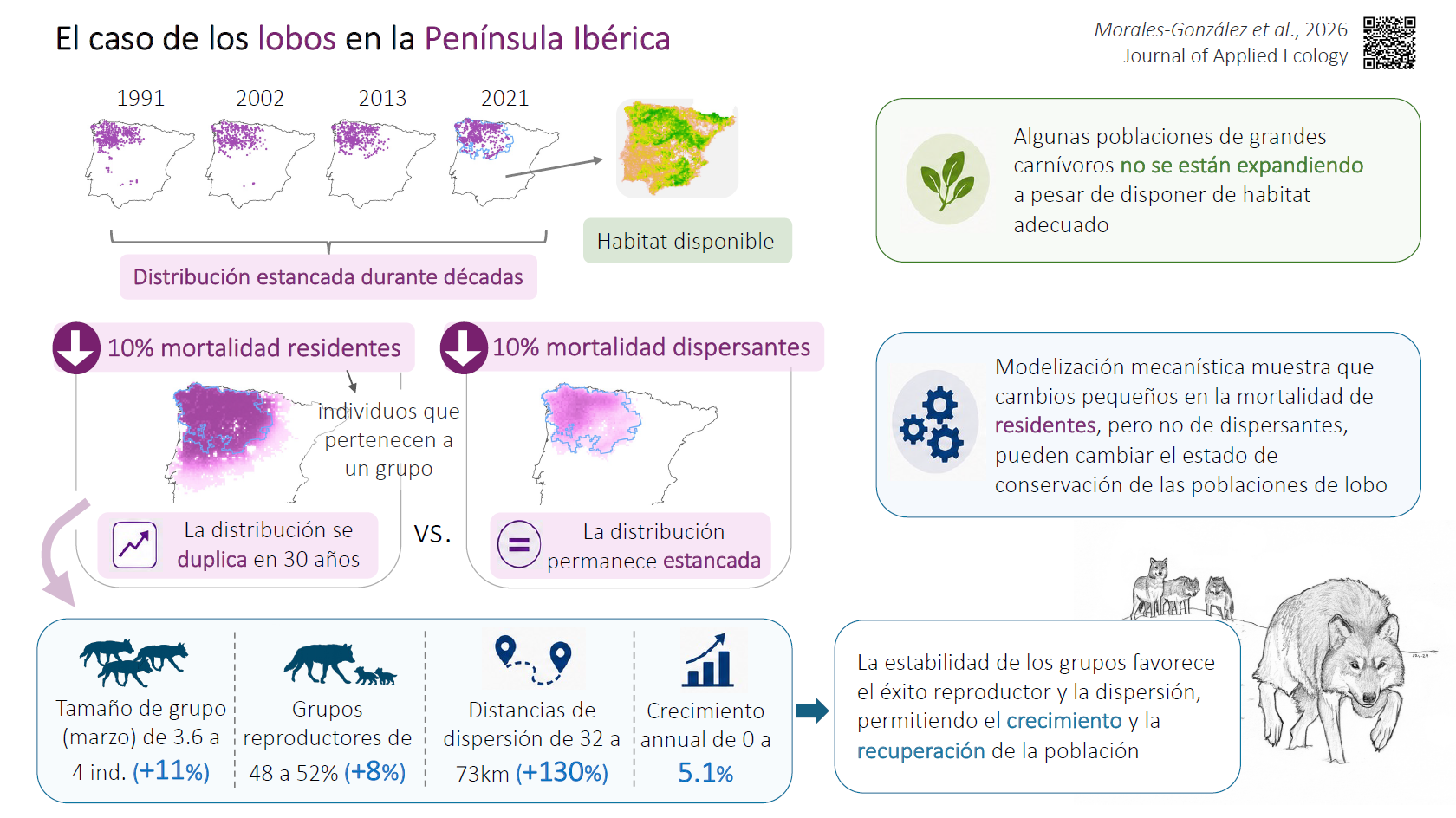
A research team led by the Doñana Biological Station (EBD-CSIC) has shown in a study on wolf demography across the Iberian Peninsula that wolf mortality explains why the species' range has barely expanded over recent decades despite the availability of suitable habitat for expansion. The study concludes that reducing mortality would be key to promoting population recovery and improving the conservation status of this population, which the IUCN classifies as "Vulnerable" in Spain and "Endangered" in Portugal.
Over the past few decades, wolf populations across Europe and North America have recovered part of their historical range and expanded into highly human-modified landscapes such as Germany, Denmark, the Netherlands and France. However, official data from Portugal and the Spanish autonomous communities where wolves are present show that this has not been the case for the Iberian wolf. Despite the availability of extensive suitable habitat, the population has shown little change in its distribution over recent decades. This apparent contradiction prompted the Doñana Biological Station research team to investigate the factors limiting its expansion.
"Over the past few decades, the distribution of wolves across the Iberian Peninsula has remained largely unchanged, apart from small areas that have been colonized and others where the species has disappeared, including the extinction of the Sierra Morena population. Meanwhile other European wolf populations expanded very rapidly during the same period," explains Ana Morales, postdoctoral researcher and lead author of the study. "We asked a simple question: what factors could explain this pattern and be preventing the species' recovery in Spain and Portugal?"
To answer this question, the team developed a highly detailed demographic model capable of reproducing changes in the Iberian wolf population between 1991 and 2021, fitting the model's demographic parameters to official data on range distribution and population size estimates collected during that period. Once the model was validated, the researchers examined how reducing mortality among different categories of individuals would affect the population's future.
The results showed that although dispersing wolves are responsible for colonizing new territories, reducing mortality only among dispersers had little effect on population dynamics. By contrast, reducing mortality among wolves living in family packs by just 10% was enough to improve the population's conservation status.
The model showed that with this modest 10% reduction in mortality of resident wolves, groups became larger, reproductive success increased, and straight-line dispersal distances rose from around 32 to more than 70 kilometres. As a result, the population could grow and expand to double its current range within approximately three decades. Based on the model, the team estimated that each year approximately one quarter of wolves living in family groups die, along with more than one third of dispersing individuals and more than half of all pups.
"The key point is that wolf groups are family units with a complex social structure, and the loss of these individuals triggers cascading effects that extend far beyond the death of isolated animals, especially when one of the breeding pair dies," explains researcher Eloy Revilla, co-author of the study. "So many vacancies and unoccupied territories are created that dispersing wolves tend to settle close to their birthplace instead of colonizing new areas."
Image