Climate change and floral resource availability have a greater impact on honeybee ageing than pollution and urbanisation.
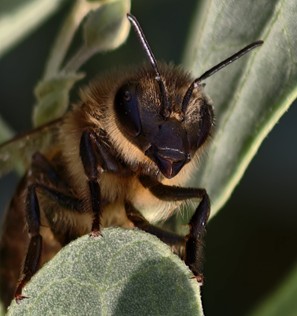
Apis mellifera. Credit: David P. Quevedo.
A study led by the Doñana Biological Station (EBD-CSIC) reveals that climate change and the availability of floral resources have a greater impact on honeybee ageing than urbanisation or environmental pollution. The study, published in Global Change Biology, uses telomeres as its primary indicator. These are small structures that protect the ends of chromosomes, and their length is commonly used as a marker of ageing and physiological wear in living organisms.
The study's findings suggest that honeybees may be able to buffer, at least to some extent, the effects directly associated with human activity, such as urbanisation and certain types of pollution. Both their mobility and adaptive capacity, as well as the social organisation of their colonies, may help reduce the impact of these environmental pressures. However, environmental changes indirectly linked to human activity—particularly rising temperatures and changes in ecological conditions such as the availability of flowers—may have a greater influence on the ageing of these insects. These findings reinforce the need to consider climate change as a major pressure on pollinator health.
The widespread decline of bees worldwide highlights the need to understand not only its causes, but also how environmental changes may affect the health, ageing and survival of these pollinators. “This study is novel because it simultaneously analyses different components of global change, including climate, urbanisation, pollution and floral resources, across a very broad environmental gradient spanning approximately 1,000 kilometres,” explains Pablo Burraco, lead author of the study and researcher at the Doñana Biological Station. “Most previous studies had examined only a single environmental factor or had been conducted at much smaller geographical scales. Moreover, this type of information was virtually non-existent for insects and other invertebrates,” he adds.
A multidisciplinary study
To carry out the study, the research team analysed more than 980 worker bees collected from nearly 60 sampling sites distributed across nine localities in Argentina. For each location, the researchers characterised climatic conditions, the degree of urbanisation, the abundance and diversity of flowers, and the presence of more than 40 organic contaminants in pollen. Telomere length was measured using DNA samples extracted from bee tissues. Finally, statistical models were used to assess the relative importance of the different environmental factors included in the study.
Future studies should determine whether the observed changes in telomeres translate into reduced bee survival, poorer colony performance or declining population sizes. “It will also be important to determine the extent to which these alterations may affect the pollination of wild plants and crops, and to quantify their potential economic consequences,” Burraco points out.
This research was made possible through extensive international and multidisciplinary collaboration among institutions in Spain, Argentina, Belgium, Nigeria and the United Kingdom. This collaboration enabled the integration of molecular, climatic, ecological, landscape and toxicological data in one of the most comprehensive studies to date on the relationship between environmental conditions and telomeres in a pollinating insect.
“This study highlights the importance of combining large-scale field surveys with molecular tools to understand how global change may affect physiological processes that, such as ageing, influence the health and future of animal populations,” Burraco concludes.
Referencia:
Pablo Burraco, Néstor Pérez-Méndez, Sofía Graffigna, Lucía C. Martínez, Joana P. Haedo, Michel Sciberras, Mara A. Maldonado, Juan P. Torretta, Gabriel Pompozzi, Sofia Copperi, Francisco Miranda, Guadalupe Peralta, Leopoldo J. Álvarez, Luis I. Pérez, Mariana L. Allasino, Mary E. R. Diniz, María P. Pascual-Tudanca, Rocío González-Vaquero, Diego P. Vázquez, Jorgelina C. Altamirano, Bilikis T. Folarin, Giulia Poma, Adrian Covaci, Hugo J. Marrero. Ageing in honeybees: telomere length is driven by climate and resource availability rather than urbanisation or pollution. Global Change Biology. https://doi.org/10.1111/gcb.71014