Fruit attracts brown bears to towns during the summer
The study, published in ‘Scientific Reports’, proposes preventive measures to reduce conflicts and promote coexistence between rural communities and brown bears
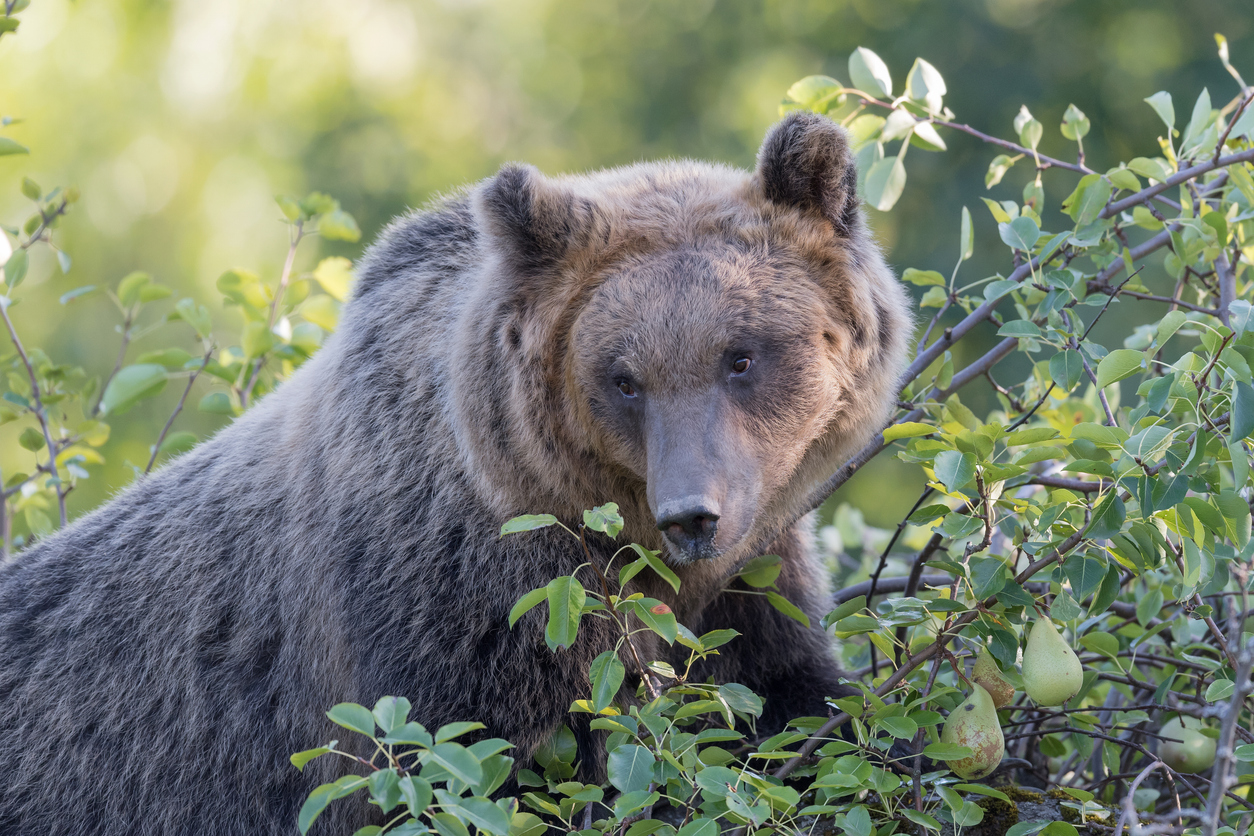
A brown bear foraging for fruit. Credit: iStock
A study by the Doñana Biological Station (EBD-CSIC), in collaboration with the University of León and the Asturias Bear Foundation, reveals that the availability of fruit and other human-derived food resources is behind most brown bear (Ursus arctos) visits to villages in the Cantabrian Mountains, especially during the summer. Furthermore, the paper published in the journal Scientific Reports provides recommendations to prevent these episodes and promote coexistence between rural communities and bears.
The analysis of 73 cases recorded between 2009 and 2021 shows that 86% were driven by the search for food associated with human activity, such as fruit crops, vegetable gardens, livestock feed, beehives, or garbage. Among these, fruit orchards were the main attraction, present in more than half of the analyzed cases. "This pattern makes sense considering that 82% of the episodes occurred during the summer months, between June and September, which is when fruit is available in the villages," explains Manuel Díaz Fernández, researcher at EBD-CSIC and lead author of the study.
The results reveal that 64% of the approaches occurred at night or during twilight hours. Additionally, most of the identified bears were young or subadult individuals, suggesting that they might be more prone to exploring food resources near human settlements.
"Bear visits to villages generate significant media attention and public concern, but until now, hardly any scientific studies existed to help understand why they occur. Understanding the factors that encourage them will allow for the design of more effective preventive measures," explains Díaz Fernández.
Some villages receive more visits than others
To understand why some villages receive bear visits while others do not, the team gathered data from public administrations responsible for monitoring brown bears, as well as technical staff from conservation entities. They also conducted interviews in affected communities and reviewed related news reports in digital media. This information was supplemented by fieldwork in the affected areas and local-scale environmental analyses. The goal: to identify which areas are more prone to receiving bear visits and to understand what motivates these animals to enter a specific village rather than another.
The results show that villages where bear visits are recorded tend to be located near breeding areas, feature higher-quality habitat, and accumulate a higher incidence of damage associated with this species. Furthermore, these settlements present characteristics that facilitate access and shelter for the animals, such as larger size, closer proximity to the forest, and rugged terrain, which could make it easier for bears to find cover and shelter before and after approaching populated areas.
Prioritizing prevention
Based on these results, the research team proposes focusing management on prevention by reducing bears' access to the resources that attract them to villages. They also advocate for standardizing data collection and categorization protocols for these incidents across the different autonomous communities. This would make it possible to accurately identify each situation, implement effective measures to mitigate conflicts, and promote coexistence strategies.
Furthermore, the researchers suggest improving the management of fruit crops and other attractants, either by hindering animal access to these resources or by removing them during peak times of the year. In fact, the study itself includes a case illustrating the effectiveness of these practices: according to a report by the Regional Government of Castilla y León, a female bear frequented several villages in the Cantabrian Mountains for years, despite repeated attempts to scare her off. The issue was only resolved when the available fruit in the village was almost entirely removed.
"These should be the type of preventive measures to prioritize, even over reactive measures focused on scaring bears away from villages, as these can lose their effectiveness over time if access to trophic resources is not eliminated," clarifies Díaz Fernández. "The key for the future is to establish management measures that allow us to anticipate these events and reduce them as much as possible," he concludes.
This study represents a first step in the systematic evaluation of brown bear visits to villages within the Cantabrian population. Its findings could be complemented by other methodological approaches, such as the use of genetic tools or bear movement analysis thanks to radio-tracking projects conducted in the region. A better understanding of the patterns and factors driving these events would help anticipate future conflicts, thereby promoting coexistence between humans and large carnivores.
The research involved the participation of the Bear Patrols from the Principality of Asturias, the Regional Government of Castilla y León, and the Government of Cantabria, as well as the involvement of the Asturias Bear Foundation and the Brown Bear Foundation. In the early stages of the project, conceptual development also benefited from the guidance of biologist Juan Seijas, who brings expertise in human-bear conflict management.
Reference:
Díaz-Fernández, M., Naves, J., de Gabriel Hernando, M. et al. Patterns of brown bear (Ursus arctos) visits to human settlements provide insights for human–wildlife coexistence. Scientific Reports. doi.org/10.1038/s41598-026-47443-4 .