Ignasi Bartomeus: “Spain is one of the places with the greatest diversity of bees”
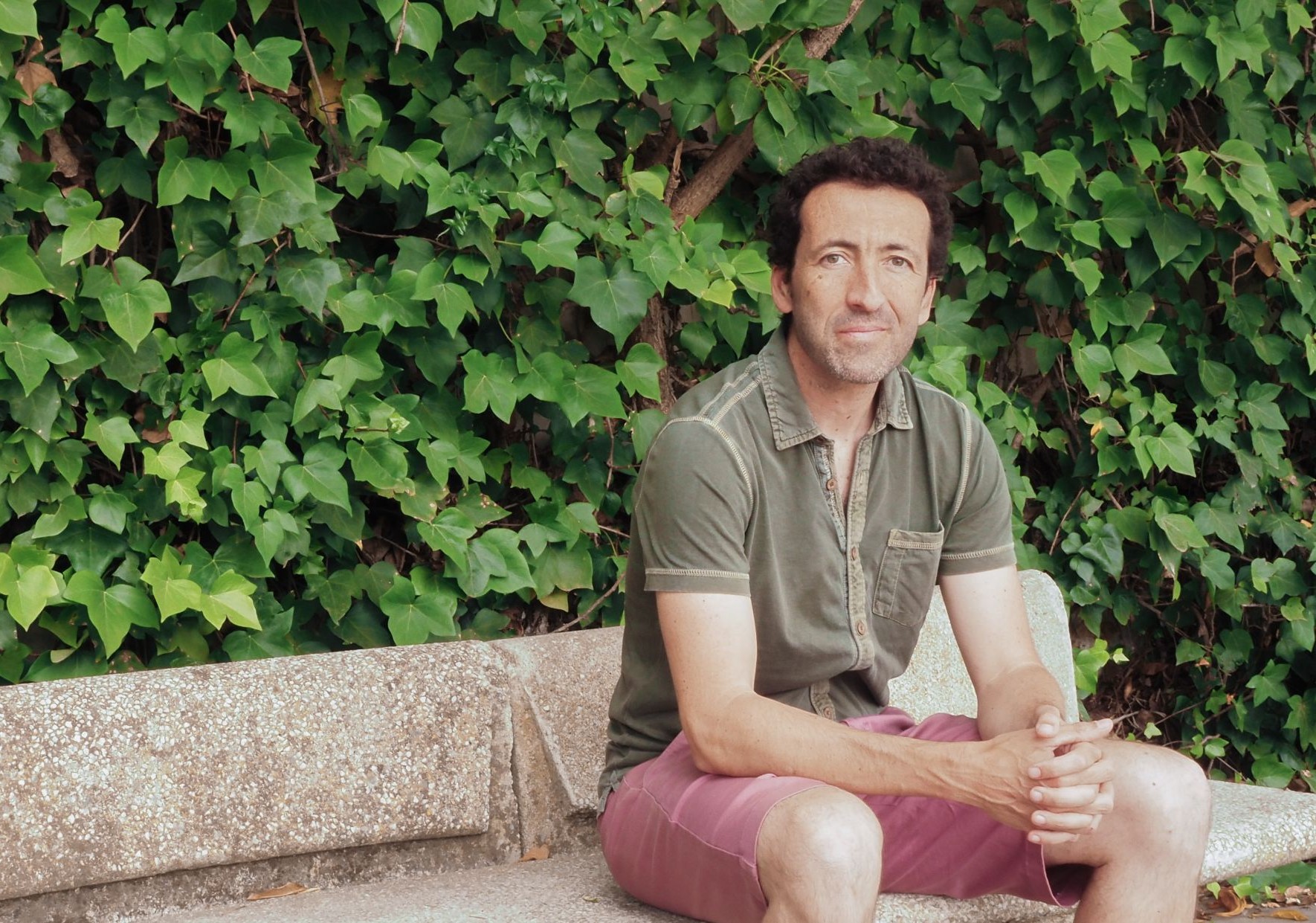
Ignasi Bartomeus, researcher at the Doñana Biological Station – CSIC.
By Fermín Grodira / Content produced as part of the CSIC – BBVA Foundation Scientific Communication Grants Programme, 2024 Call
Biologist Ignasi Bartomeus conducts research at the Doñana Biological Station, a centre of the Spanish National Research Council (CSIC) in Seville, on how plant and pollinator communities function. His research ranges from basic science, where he seeks to understand how these complex networks between plants and pollinators work, to a more applied line of research focused on the conservation of pollinators and the role of pollination.
Q: What service do insects or pollinating insects provide?
A: They allow plants to reproduce. In crops, they enable many fruit trees to produce harvests. Although cereals are pollinated by the wind, most fruits, vegetables and horticultural crops do depend on pollinators, and they are the most important crops in terms of vitamins and nutrients. In any case, too much emphasis is often placed on a highly utilitarian aspect—what we can use them for—when they provide us with a range of intangible services that allow natural ecosystems to exist and forests and grasslands to function. Biodiversity deserves to be conserved for its own sake, regardless of the benefits it provides us.
Q: How important is pollinator diversity?
A: Different species of bees and other pollinators have evolved to live in different habitats and visit different flowers. The honey bee will never be interested in a tomato because it cannot obtain a reward from it. If we want pollination for a diversity of plants, whether crops or plants in natural areas, we need a diversity of pollinators because not all of them are suitable for all plants.
Q: What is the current situation of pollinators?
A: There are rapid changes in the environment, such as the destruction of natural habitats. Climate change is already having a major impact on our ecosystems, and there are other threats affecting biodiversity in general. Insects may appear to be more resilient to these changes because they can survive in much smaller areas and have faster life cycles, but they are nevertheless being affected. Numerous pollinator species are on the Red List of threatened species. In Europe, there is an overall decline in populations. A clear example is high-mountain species, which, due to climate change, can no longer find the conditions they need to live and reproduce. Insects are cold-blooded animals, so temperature is directly linked to their metabolism. When the temperature rises, their metabolism speeds up.
Q: How does the pollinator crisis manifest itself?
A: There is evidence that in many areas and habitats we are losing pollinators. I like to see it as a warning signal. Fortunately, few extinctions have been detected in Europe, which means that we still have time to reverse this process. As long as populations remain, even if they are small, if we restore habitat, better connect agricultural areas, reduce pesticide use and work to mitigate the effects of climate change, many of these populations can recover. The advantage of insects is that they have very fast life cycles, and if conditions are favourable for two or three consecutive years, they can greatly increase their populations. We are at the point where we can act and reverse the damage.
Q: However, the number of honey bee hives has increased.
A: The pollinator crisis is sometimes focused on the honey bee. On the one hand, it is experiencing very high mortality rates, but because it is a species managed by beekeepers, they encourage the presence of more colonies. The number of honey bee colonies is increasing, but this is not a natural process. It occurs for livestock-production reasons. Wild bee species in general are more affected by these environmental changes because there is no one looking after them. Spain is one of the places with the greatest diversity of bees. In Spain alone, there are more than a thousand different bee species. They all contribute to pollination and are very important, even though they do not form hives or produce honey for us.
Q: How can science or technology help prevent or mitigate this crisis?
A: Basic knowledge is very important to understand their condition and the pressures they face. We need this knowledge in order to take action. There is a more practical aspect: determining which conservation measures work. We need to maintain more natural areas and reduce pesticides. There is also a deeper question: what kind of social system do we want to live in? This requires a profound change in the way we structure our socioeconomic system. The conservation measures we can take now must be implemented, but in the long term we need to change the way we treat nature.
Q: Should one of these changes be in beekeeping?
A: Small-scale beekeeping is an activity that coexists perfectly well with nature. At the other extreme, there are large-scale beekeepers who have millions of hives. Often, to feed all these colonies, the available flower resources are not sufficient in one location, so they move the hives from one place to another following the flowering season. This is when they can begin to compete with native species, especially in dry years and degraded landscapes. High densities of honey bees are an additional pressure on wild populations. When many individuals are kept together, the likelihood of disease is higher. And if you move them as well, there is a greater chance of these pathogens spreading. The honey bee used to have wild populations in Spain, but now they are extremely rare. In almost all of Spain, there are virtually no wild populations of honey bees, mainly due to pathogens introduced through the management of bees by beekeepers.
Q: What effect can placing hives in national parks, as in the case of Teide, have?
A: Teide is particularly distinctive because it is an especially fragile ecosystem. The team led by Alfredo Valido, a senior scientist at the Institute of Natural Products and Agrobiology (IPNA-CSIC), has observed that in many of the endemic plant species in this national park, honey bees displace native bees, reducing their ability to reproduce. From a conservation perspective, the honey bee is still a new element in the natural park. You are introducing a species in very high abundance that is highly competitive and will displace other species. We have to decide how to manage natural parks.
Q: Have there been improvements following the ban on some pesticides?
A: The lethality of pesticides is decreasing. Applications and dosages have also improved. Even so, there is still considerable room for improvement. Regulation of certain pesticides is positive, but it is more important to think about when and how we should apply them. We should move towards integrated pest management: rather than applying pesticides preventively, we should wait and use them in the year and on the plot where they are actually needed. This already greatly reduces their use and makes it compatible with agricultural production.
Q: How can we personally help pollinators?
A: There are actions as simple as doing nothing. If you have a small garden, you can let it grow a little wilder without using pesticides. If a flowering plant appears, don't mow the lawn every two weeks; perhaps do it every month and a half instead, giving it a little more time to live. We can also choose which plants we have. In general, native plants will be much more appreciated by native pollinators. The greater the diversity, the better. The best thing we can do is provide floral resources and nesting sites, but these can sometimes be more difficult to manage. The wilder you leave an area, the easier it is for them to find places to nest.