The northern Spanish region of Asturias harbours a remarkable diversity of cicadas, including a potentially new species
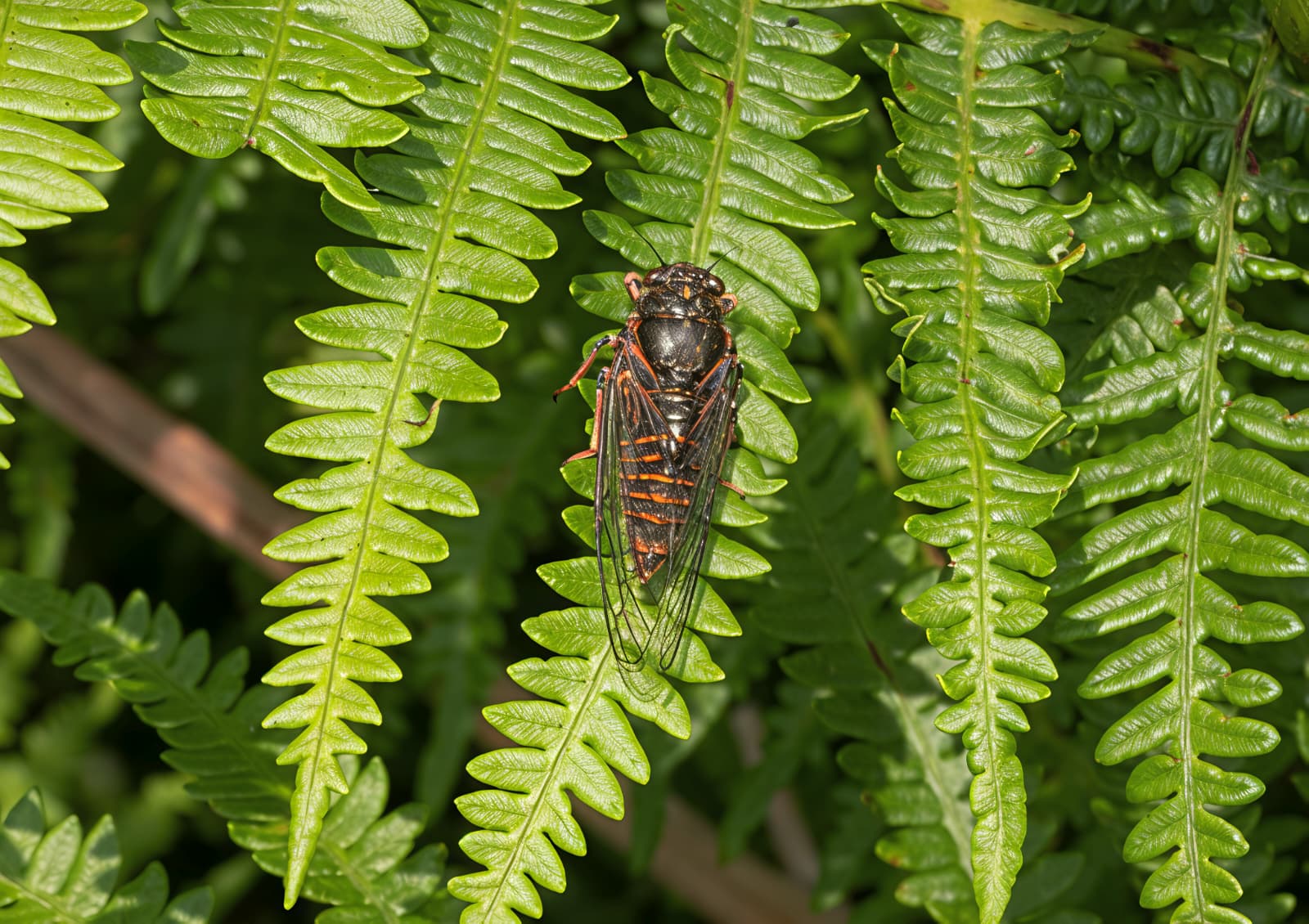
Cicadetta in Lena, Asturias. Credit: Saúl Rodríguez.
A study coordinated by the Doñana Biological Station (EBD-CSIC) demonstrates that the Atlantic climate of northern Iberia does not prevent the presence of diverse cicada populations, traditionally associated with warm Mediterranean regions. The study, published in the Journal of Insect Science, identifies four cicada taxa in Asturias: Cicada orni, Tibicina quadrisignata, Tettigettalna argentata and Cicadetta sp. In addition, the researchers detected a population of Cicadetta whose acoustic and genetic characteristics do not match any previously known European species.
“The results suggest that it could be a species that has not yet been described, although additional taxonomic studies will be necessary to formally confirm this,” says Jairo Robla, researcher at the Doñana Biological Station and first author of the study.
Since Atlantic environments, characterized by high humidity and mild summers, were considered unsuitable for cicadas, these insects had never been studied in northern Iberia. As a result, this research provides the first comprehensive characterization of their distribution, habitat, behaviour, songs and genetic diversity in Asturias.
A novel approach
The study was conducted over three fieldwork seasons between 2023 and 2025 across different areas of Asturias. During the surveys, males were located by their songs, the coordinates of the populations were recorded, and information was collected on habitat, vegetation, altitude, temperature and the behaviour of the specimens.
Cicada songs, which are essential for distinguishing species, were recorded and analysed using sonograms. In addition, several specimens were collected for morphological identification and subsequently deposited in the Scientific Collections of the Doñana Biological Station. Finally, distribution models based on climatic and topographic variables were developed to identify the areas of Asturias with the most suitable conditions for each species, helping to guide future surveys. “The combination of ecological, acoustic, morphological and molecular information is particularly innovative, as this kind of integrative approach is not usually applied,” highlights Robla.
Further research ahead
Besides considerably expanding knowledge of insect biodiversity in northern Iberia, the results show that Atlantic environments can harbour unique and potentially unknown lineages. Furthermore, the data indicate that climate change and wildfires may affect different species in different ways. While some thermophilic cicadas may expand their distribution, other populations adapted to cooler and more humid environments could be negatively affected. The distribution models can be used to direct future surveys towards areas with a higher probability of harbouring previously unknown populations or even new species. This will help complete the inventory of cicadas in Asturias and determine whether other geographically nearby species are also present.
“One of the main future research lines will be to study the Cicadetta population in greater detail, comparing it with European populations through broader morphological, acoustic and genomic analyses. If its uniqueness is confirmed, this work could ultimately lead to the formal description of a new species,” concludes Robla.
Reference
Robla, J. Nunes, V. L., Orois, I., Cabana, M., Rodríguez-Pérez, J., Sánchez, O. & Rodríguez, S. R. (2026). Echoes from northern Iberia: distribution, ecology, genetics and identification of Asturian cicadas (Hemiptera: Cicadidae). Journal of Insect Science. https://doi.org/10.1093/jisesa/ieag065