Song, more than color, helps prevent hybridization in birds
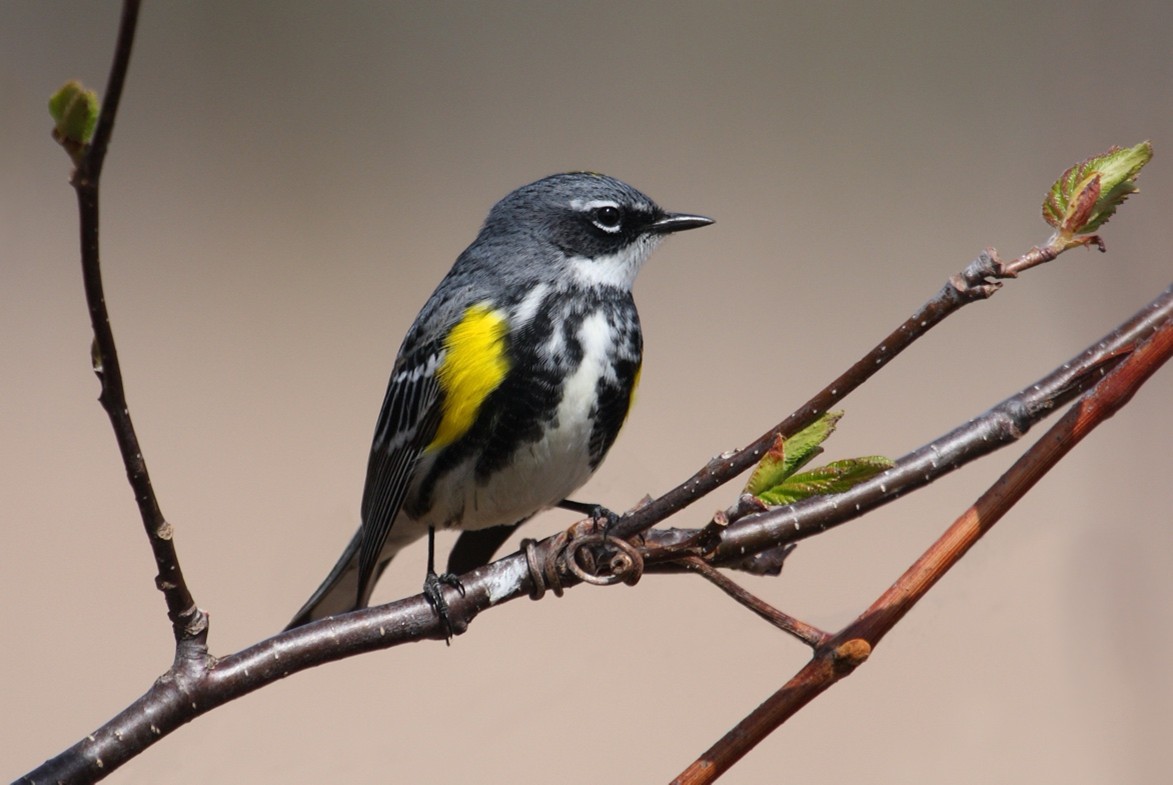
Yellow-rumped Warbler (Setophaga coronata), one of the bird species with the highest rates of hybridization. Creative Commons
In the wild, correctly identifying a potential mate from the same species can be crucial. In many animals—and especially in birds—this recognition relies on signals such as song, plumage coloration, or courtship behaviour. But which of these signals matters most in preventing interbreeding between different species? A new study by the Doñana Biological Station (EBD-CSIC), published in Biology Letters, suggests that, in birds, song may play a more decisive role than plumage coloration in limiting hybridization between species. The study examined whether differences in acoustic and visual signals between species with their propensity to hybridize.
Hybridization—the mating of individuals from different species—is far more common than traditionally believed and continues to fascinate evolutionary biologists. Although it can generate genetic variation and, in some cases, contribute to the evolution of new forms, it can also carry significant costs. If hybrids have lower survival or reproductive success, natural selection is expected to favour mechanisms that help species recognize one another correctly and avoid “mistaken” matings, thereby increasing their overall fitness.
In birds, two of the most prominent communication channels are song and colour. Song plays a direct role in mate attraction, territory defence, and species recognition. Plumage coloration, meanwhile, can function as a visual signal during courtship and social interactions. However, the relative importance of these two signals in reducing hybridization between species had never been assessed on a broad scale.
To investigate this question, the research team compared closely related bird species and evaluated the extent to which differences in their acoustic and visual signals were associated with the number of documented hybrid combinations.
“The logic is straightforward: if two species are very similar in their mating signals, recognition errors are more likely to occur. Conversely, if their signals differ greatly, hybridization should be less likely,” says Vicente García-Navas, the lead author of the study.
The findings point to a particularly important role for song. Species with more divergent songs were less likely to hybridize, suggesting that acoustic signals may act as a pre-mating barrier that reduces the likelihood of interbreeding. By contrast, differences in plumage coloration showed no clear relationship with hybridization. This does not mean that colour is unimportant in bird communication. In many species, plumage plays essential roles in sexual selection, social recognition, and competition between individuals. However, the study indicates that, at a broad evolutionary scale, song may be a more effective signal—or one more directly involved in maintaining reproductive isolation between species.
"One possible explanation is that song is a highly specific and flexible signal, capable of conveying detailed information about species identity. Moreover, in many songbirds, acoustic communication takes place precisely during courtship and territorial defence, where recognition errors can have direct reproductive consequences," explains García-Navas. "Plumage colour, on the other hand, is shaped by multiple selective pressures—including camouflage, sexual selection, the light environment, and predation—which may weaken its direct relationship with hybridization."
The study addresses a longstanding question in evolutionary biology: how species remain distinct despite living in close contact and having opportunities to interbreed. Its findings support the idea that communication signals not only attract mates but also help preserve the boundaries between species.
Reference
García-Navas, V., Ortego, J. (2026) Song but not colour divergence constrains hybridization in birds. Biology Letters, 122: 20260237 https://doi.org/10.1098/rsbl.2026.0237