Study reveals mosquito microbiota varies by species, environmental factors, and avian malaria infection
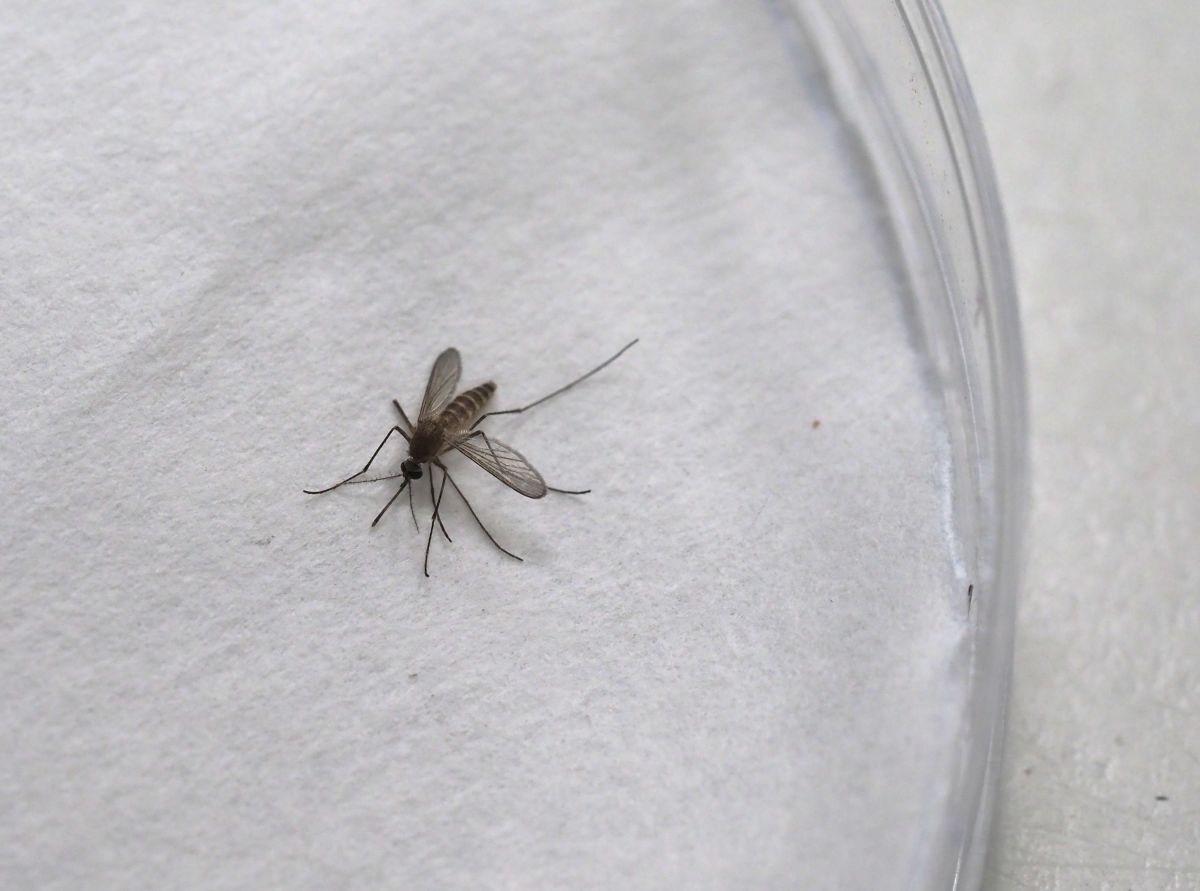
Female common mosquito Culex pipiens. Credit: Joaquín Alonso / EBD-CSIC
A research team led by the Doñana Biological Station (EBD-CSIC) has identified how the composition of the bacteria that naturally inhabit mosquitoes (their microbiota) varies according to the insect species, capture location, season of the year, and the presence of avian malaria parasites (Plasmodium spp.). The findings, published in the journal Microbial Ecology, contribute to improving our understanding of one of the factors that determines mosquitoes' ability to transmit diseases.
“The microbiota plays a fundamental role in mosquito biology because it influences the development and transmission of pathogens through multiple mechanisms and, therefore, their ability to transmit diseases,” explains Marta Garrigós, a predoctoral researcher at the Doñana Biological Station. Despite this, most of the available knowledge comes from studies conducted in laboratories, while little is still known about how this bacterial community varies in wild mosquito populations.
To address this question, the scientific team analysed three mosquito species from southern Spain, important vectors of pathogens relevant to both public and animal health: the common mosquito (Culex pipiens), Culiseta longiareolata, and the Asian tiger mosquito (Aedes albopictus). Mosquitoes were collected from four locations in Granada and one in Málaga. Using 16S rRNA bacterial gene sequencing techniques, the researchers characterised the insects' bacterial microbiota and determined the presence of avian malaria parasites.
The results reveal clear differences among the three species. Culiseta longiareolata showed a more diverse microbiota than the other two species. Meanwhile, bacteria of the genus Wolbachia, an endosymbiont known for its ability to block the replication of viruses and other pathogens, were found at high frequency in Culex pipiens and the Asian tiger mosquito, unlike in Culiseta longiareolata.
The study also shows that, in the case of Culex pipiens, the composition of the microbiota is largely influenced by the location where the mosquitoes were collected and, to a lesser extent, by the season of the year. In addition, the research team identified differences in the abundance of certain bacteria associated with Plasmodium infection, the parasite responsible for avian malaria. Specifically, infected mosquitoes showed a higher relative abundance of bacteria belonging to the genus Alloprevotella and a lower abundance of the genera Allorhizobium-Neorhizobium-Pararhizobium-Rhizobium and Neisseria.
A pioneering study on wild mosquitoes
This research represents the first characterisation of the microbiota of different wild mosquito species in Spain, including both native and invasive species, and incorporates the analysis of environmental factors and intrinsic characteristics of the insects themselves, as well as the prevalence of parasites affecting wild fauna. This is particularly relevant because the factors influencing interactions between mosquitoes and wildlife pathogens remain much less studied than those of importance to human health.
“Understanding how the mosquito microbiota varies may help develop new strategies for controlling diseases transmitted by these insects, which cause more than half a million deaths each year. In recent years, bacteria such as Wolbachia have been used as a method to control these vectors, such as the Asian tiger mosquito,” explains Josué Martínez de la Puente, researcher at the Doñana Biological Station.
The findings show that the presence of this and other bacteria varies among species, enabling more precise investigations into how these microbial communities may influence mosquitoes' ability to transmit pathogens.
Likewise, the variations observed among locations and seasons could explain the spatial and temporal differences in pathogen transmission, such as avian malaria parasites. Furthermore, the identification of several bacterial groups associated with avian malaria infection provides new candidates for future research.
Relevance for public health and conservation
Although the parasites analysed in this study exclusively infect birds and do not infect humans, the mosquito species studied also act as vectors of pathogens of importance to public health and animal health in Spain. Therefore, understanding which ecological factors modify the microbiota of these insects and how it influences pathogen transmission represents an important advance both for basic research and for the development of future surveillance and control strategies for vector-borne diseases.
The study was led by the Doñana Biological Station (EBD-CSIC) with the collaboration of the CIBER for Epidemiology and Public Health (CIBERESP), Rey Juan Carlos University and its Global Change Research Institute (IICG-URJC), the Málaga Biomedical Research Institute and Nanomedicine Platform (IBIMA Plataforma BIONAND), the CIBER for Obesity and Nutrition (CIBEROBN), the University of Granada, and Bioparc Fuengirola.
Reference:
Marta Garrigós, Jesús Veiga, Mario Garrido, María José García-López, Manuel Morales-Yuste, Clotilde Marín, Jesús Recuero, María José Rosales, Isabel Moreno-Indias & Josué Martínez-de la Puente. 2026. Drivers of Mosquito Microbiome Composition: Effects of Species, Locality, Season, and Plasmodium Infection. Microbial Ecology, in press. https://doi.org/10.1007/s00248-026-02801-7