Environmental conditions and mosquito species determine the circulation of avian malaria in the wild
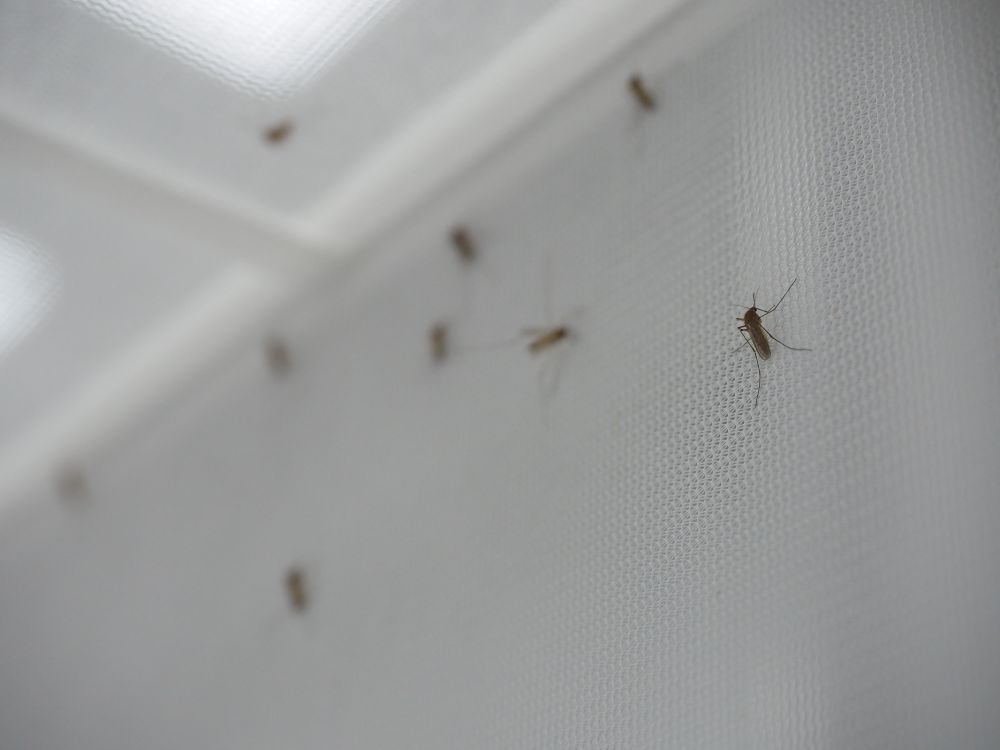
Group of Culex sp. || Credit: Joaquín Alonso (EBD-CSIC)
Temperature, vegetation cover, and mosquito species affect the circulation of avian malaria parasites in the wild. A study carried out at the Doñana Biological Station (EBD-CSIC) and published in Scientific Reports reveals that these factors are associated with the variants of Plasmodium circulating in the wild and their prevalence, providing key information for understanding how environmental and climate change may alter the transmission of diseases such as avian malaria in wildlife.
“Avian malaria is a disease caused by parasites of the genus Plasmodium, related to those that cause human malaria, but which are not capable of infecting humans,” explains Ana Irina Martín López, a predoctoral researcher at the Doñana Biological Station - CSIC. These parasites are naturally transmitted among birds through mosquito bites, mainly by mosquitoes of the genus Culex. Although they pose no risk to human health, they provide an excellent model for understanding the factors that regulate the transmission of mosquito-borne diseases.
Until now, most studies on avian malaria have focused on birds, while the role of mosquitoes has received much less attention. This study offers a new perspective by analysing how different environmental variables are associated with avian malaria parasite communities in two mosquito species with different ecologies: Culex pipiens, the common house mosquito, and Culex perexiguus.
The results show that environmental factors affect each mosquito species differently. In Culex pipiens, parasite prevalence increases in areas with greater vegetation cover, while in Culex perexiguus it is associated with higher minimum temperatures. In addition, parasite communities differ between the two mosquito species. “This suggests that each species could play a specific role in the circulation and transmission of different parasite variants,” the researcher explains.
Nine avian malaria parasite lineages described
The study has also revealed greater genetic diversity among avian malaria parasites than previously known. The scientific team identified nine lineages of Plasmodium described for the first time in science, a finding that highlights how much remains to be discovered about the biodiversity and ecology of these parasites circulating in the wild.
The scientific team stresses the need to study birds, mosquitoes, and environmental conditions together in order to gain a more precise understanding of how vector-borne diseases circulate. It also highlights the value of combining molecular tools and environmental analyses to unravel complex ecological processes that affect biodiversity and ecosystem health. Anticipating the effects of environmental change
These findings open up new avenues of research aimed at gaining a more precise understanding of avian malaria transmission dynamics. In the future, it will be important to analyse the role of bird community composition and to assess how climate change could alter mosquito distribution and the environmental conditions that favour parasite circulation.
“In a context of global change, variations in factors such as temperature could significantly alter transmission patterns. Understanding how the environment influences pathogen transmission by mosquitoes is essential for anticipating the impact of environmental and climate change on wildlife health,” concludes Ana Irina Martín-López.
Reference:
Ana Irina Martín-López, María José Ruiz-López, Josué Martínez-de la Puente, Sergio Magallanes, Shirin Taheri, Santiago Ruiz & Jordi Figuerola. Environmental factors affect the communities of avian Plasmodium in two species of Culex mosquitoes. Scientific Reports, 16, 20638 (2026). https://doi.org/10.1038/s41598-026-51361-w